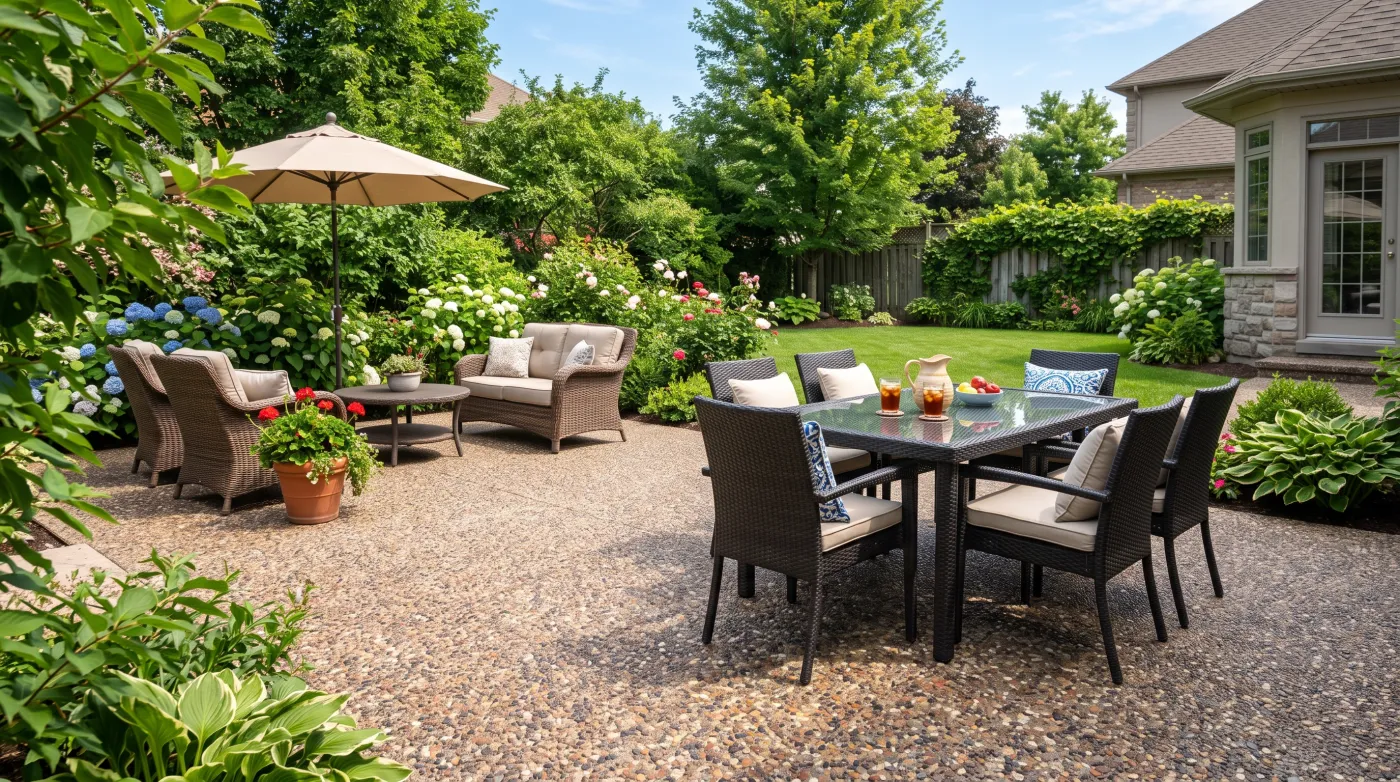
Stamped Concrete SealingKeep the Colour. Keep the Pattern.
You paid for decorative concrete because it looks like stone. Okanagan sun bleaches that colour, and 80+ freeze-thaw cycles a year chew at the pattern edges. The right sealer stops both.
Get Your Free Quote
No obligation · Same-day response · 100% local
80+
Freeze-Thaw Cycles/Year
35+
Summer High Temps (C)
2
Premium Sealer Options
5-Year
Written Warranty (Pavix)
The Okanagan Problem
Why Stamped Concrete Needs Sealing Here
Stamped concrete is regular concrete wearing a nice suit. The colour is in a thin layer at the surface. The pattern is pressed into that same surface. Everything you paid extra for lives in the top fraction of an inch, and that's exactly the part the Okanagan attacks.
UV fades the colour. Our summer sun is relentless. Unsealed colour hardener and release-agent tones bleach out season by season until that slate-grey patio reads chalky and washed out.
Freeze-thaw pops the pattern edges. Water sits in the grout lines and texture of the stamp, soaks in, then freezes and expands. The crisp edges of the pattern are the thinnest, most exposed part of the slab, so they chip and scale and flake first.
Salt finishes the job. De-icer tracked in from the driveway or road eats at the surface paste and speeds up scaling on any unsealed decorative finish.
We seal stamped, coloured, and decorative concrete across the valley, including concrete sealing in Kelowna and every community from Vernon down to Penticton.
Two Honest Options
The Best Sealer for Stamped Concrete: Pick Your Priority
Stamped concrete is the one surface where the acrylic-versus-penetrating question has two right answers. Here's the straight trade-off.
The Colour-Pop Champion
Topical Acrylic (Wet Look)
- Deepens the colour and makes the pattern pop
- Classic wet-look sheen stamped concrete is known for
- The traditional choice on decorative finishes
- We add a fine anti-slip additive on walkable surfaces
- Needs a recoat every 1 to 3 years to keep the finish
- Quality matters: cheap acrylic is where hazing and peeling come from
Best for: feature patios and entrances where the look is the point and you don't mind a maintenance cycle.
The Zero-Maintenance Pick
Penetrating Pavix CCC-100 (Matte)
- Soaks into the concrete, no film, nothing to peel
- Keeps the natural matte look and slip resistance
- Blocks water, salt, and freeze-thaw from inside the pores
- Preserves colour by stopping UV-driven surface erosion
- 7 to 10+ years of protection, backed by our 5-year written warranty
- Can never haze or turn white, because there's no film to trap moisture
Best for: homeowners who want the protection handled once and don't need the gloss.
Not sure which way to go? Our penetrating vs. acrylic sealer guide breaks the whole decision down, or we'll walk you through it on a free on-site assessment.
Resealing Stamped Concrete
White Haze, Peeling, Slippery Patches: What Went Wrong
Here's the truth about most stamped concrete problems we get called about: they weren't caused by the concrete. They were caused by a cheap topical sealer applied badly, or a new coat rolled over a failing old one.
That white, cloudy haze? It's called blushing. Moisture got trapped under an acrylic film that went on too thick, went on over damp concrete, or got recoated over a layer that was already letting go. Peeling and flaking are the same story a year further along. And a slippery surface is usually a glossy film with no anti-slip additive in it.
Proper resealing doesn't bury the problem under another coat. If the old sealer is failing, it gets stripped or corrected first. Then the surface is cleaned, dried, and sealed the right way. That prep work is the difference between a reseal that lasts and one that hazes again next summer.
How often should you reseal? Honest answer: acrylic every 1 to 3 years to keep the finish, penetrating Pavix every 7 to 10+ years. If your surface has stopped beading water, it's due.
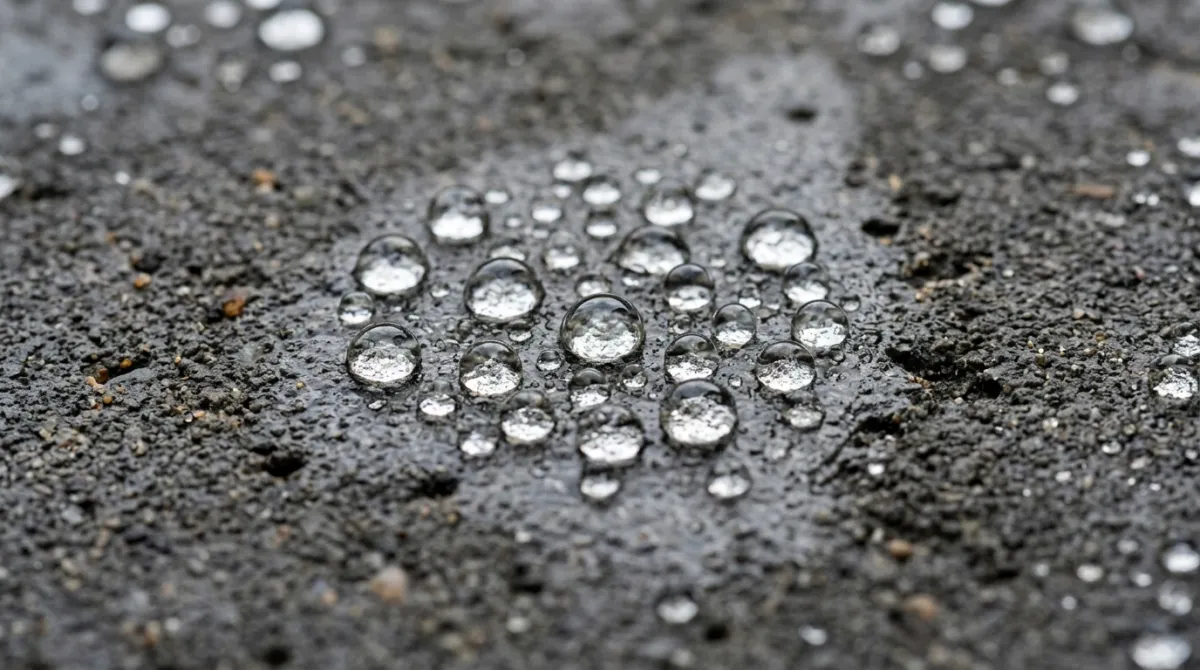
The 10-Second Test
Pour a cup of water on your stamped concrete. If it beads up and sits on the surface, your sealer is still working. If it darkens the concrete and soaks in, the protection is gone and the colour and pattern are taking the weather unprotected. That's the moment to book a reseal, before winter does the damage.
Our Process
How We Seal Stamped Concrete
Decorative concrete punishes shortcuts. Here's how we do it properly, every time.
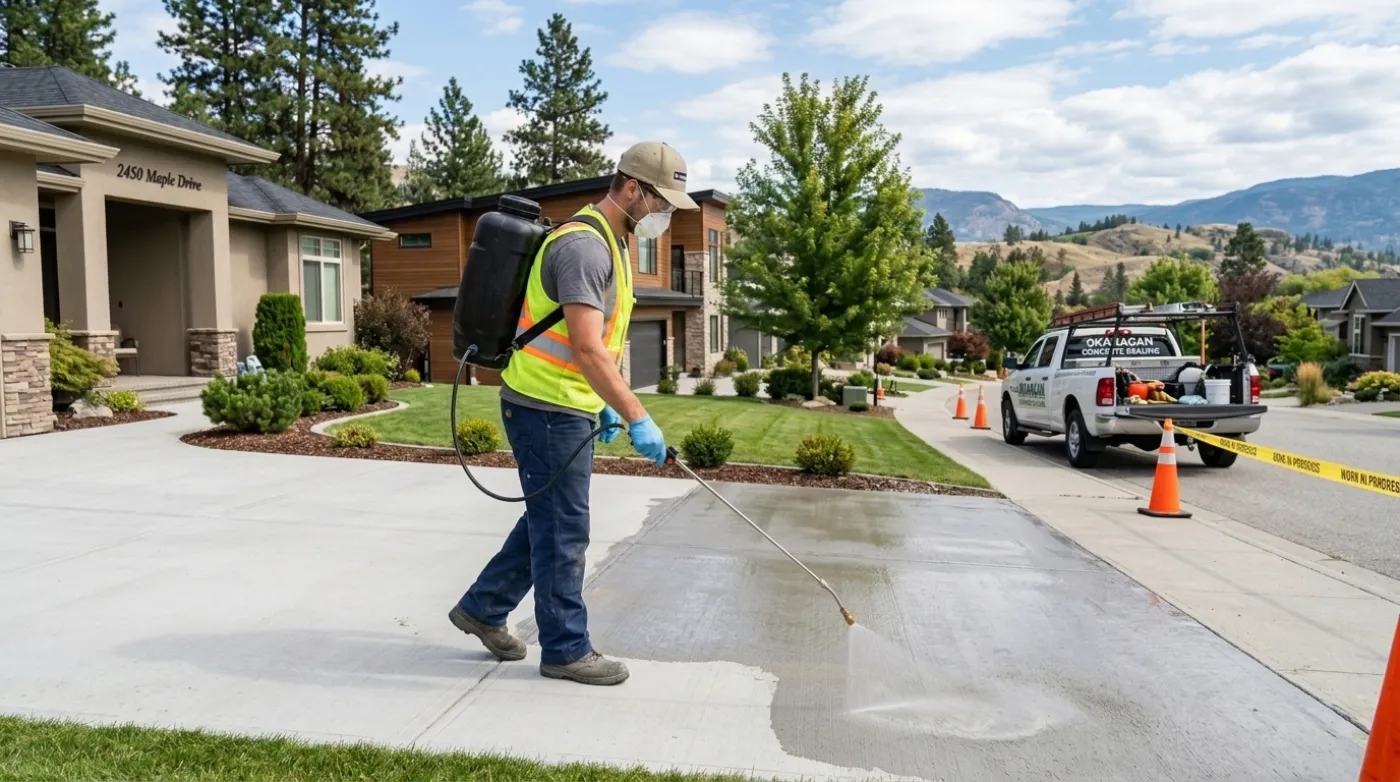
Free On-Site Assessment
We look at the concrete's condition, the existing sealer (if any), and how the surface is used. Then we recommend acrylic or penetrating based on what you actually want from it.
Strip or Correct Failing Sealer
If an old acrylic is hazing, whitening, or peeling, it comes off or gets corrected before anything new goes on. Sealing over failure just seals in failure.
Deep Clean & Dry
Thorough pressure washing pulls dirt, mildew, and residue out of the stamp texture and grout lines. Then the slab dries properly so the sealer can bond.
Professional Application
Pavix gets sprayed evenly and soaks in. Acrylic goes on in thin, even coats with anti-slip additive mixed in for walkable surfaces. Thin coats are the whole game with acrylic.
Cure & Protect
You can typically walk on it the same day. We'll tell you exactly how long to keep it dry and when furniture can go back.
Final Walkthrough
We check coverage across the whole pattern, explain the maintenance rhythm for the sealer you chose, and answer whatever's on your mind.
One honest boundary: we seal and reseal stamped concrete. We don't do stamping, installation, repair, crack-fill, or resurfacing. If your slab needs repair work first, we'll say so at the assessment.
Why Homeowners Trust Us
Licensed, Insured, and Backed in Writing
Licensed & Insured
A real licensed business with proper insurance and WorkSafeBC coverage. COI or clearance letter available on request.
5-Year Written Warranty
Pavix CCC-100 sealing work is backed by a 5-year written warranty. Not a handshake. Paper.
Free On-Site Assessment
No-obligation assessment of your stamped concrete and its existing sealer before you decide anything.
No Travel Fees
Kelowna, West Kelowna, Vernon, Penticton, Lake Country, and Summerland, all at the same rate.
Wondering what sealing runs? We don't do surprise numbers. Get a free quote for your exact surface, or see how sealing costs are built in our concrete sealing cost guide.
FAQ
Stamped Concrete Sealing Questions
What's the best sealer for stamped concrete?
There are two honest answers. If you want the wet-look sheen that makes the colour and pattern pop, a quality topical acrylic is stamped concrete's classic choice, and we add a fine anti-slip additive on walkable surfaces. If you want maximum protection with zero maintenance, penetrating Pavix CCC-100 soaks in, keeps the natural matte look, and protects for 7 to 10+ years. The bad option is the cheap big-box acrylic. That's the one that hazes, peels, and turns white.
How often should you seal stamped concrete?
Depends on the sealer. Topical acrylic needs a recoat every 1 to 3 years to keep the finish looking right. Penetrating sealers like Pavix CCC-100 last 7 to 10+ years because they work inside the concrete instead of sitting on top. Either way, if water has stopped beading and the colour looks thirsty when dry, it's time.
Why is my stamped concrete turning white?
That white or cloudy haze is almost always blushing: moisture trapped under an old acrylic sealer, usually one that was applied too thick, applied over damp concrete, or recoated over a failing layer. The fix is not another coat on top. The failing sealer has to be stripped or corrected first, then the surface prepped and resealed properly. Piling new sealer over a hazing layer just locks the problem in.
Why is my stamped concrete flaking or peeling?
On stamped concrete, flaking and peeling is almost always the topical sealer failing — not the concrete itself. A cheap or too-thick acrylic, one applied over a damp or dirty surface, or an old coat recoated one too many times loses its bond and starts lifting in flakes, often taking some of the colour hardener with it. Okanagan freeze-thaw and UV speed it up. The fix is not another coat on top: the failed acrylic has to be stripped and the surface prepped, then resealed — either with a fresh acrylic for the wet look, or with penetrating Pavix CCC-100 that soaks in and can't peel because there's no film to fail. If the concrete surface underneath is genuinely spalling (not just the sealer), that's repair territory first, and we'll tell you honestly which one you're looking at on the free assessment.
Can you seal old stamped concrete?
Yes, and it's worth doing. Older stamped concrete usually needs more prep: a thorough cleaning, and if there's a failing acrylic on it, stripping before resealing. Once it's prepped, sealing revives the colour and puts protection back on a surface that's been fading. We assess the existing sealer condition during the free on-site assessment.
Does sealing make stamped concrete slippery?
It can, if it's done carelessly. Topical acrylics form a film, and a glossy film gets slick when wet. That's why we mix a fine anti-slip additive into acrylic on any walkable decorative surface. Penetrating sealers like Pavix don't change the surface texture at all, so slip resistance stays exactly as it was.
Should I choose a wet look or a matte finish?
Wet look (acrylic) deepens the colour and gives the pattern that just-rained richness. It looks fantastic and needs a recoat every 1 to 3 years to stay that way. Matte (penetrating Pavix) keeps the concrete looking natural and untouched while protecting from within for 7 to 10+ years. Pick by how much you value the sheen versus how little maintenance you want.
Do you repair cracks in stamped concrete?
No. We're a sealing company, not a repair or resurfacing contractor. We don't do stamping, crack-fill, patching, or overlays. If your stamped concrete needs repair, we'll tell you straight during the assessment so you can get that handled first. Sealing sound concrete is what we do, and sealing is what keeps small problems from becoming repair jobs.
How soon can new stamped concrete be sealed?
New concrete needs to finish curing before a sealer goes on. The general rule is roughly 28 days after the pour, though mix, weather, and any cure-and-seal product the installer used all matter. We confirm timing during the free assessment so the sealer bonds properly instead of trapping cure moisture.
Does resealing include stripping the old sealer?
Only when it needs it. If the existing acrylic is sound, a clean and recoat is fine. If it's hazing, whitening, flaking, or peeling, recoating over it just buries the failure. In that case proper resealing means stripping or correcting the failing layer first, then prepping and sealing. We tell you which situation you're in after we see the surface.
Stamped Concrete Sealing Service Areas
We seal stamped and decorative concrete throughout the Okanagan Valley
No travel fees anywhere in these areas. Outside them? Give us a call anyway.
Protect the Pattern Before It Fades
Stamped concrete only stays beautiful if the surface layer stays protected. One proper seal beats years of watching the colour wash out.
Free on-site assessment. Honest sealer recommendation. No pressure.