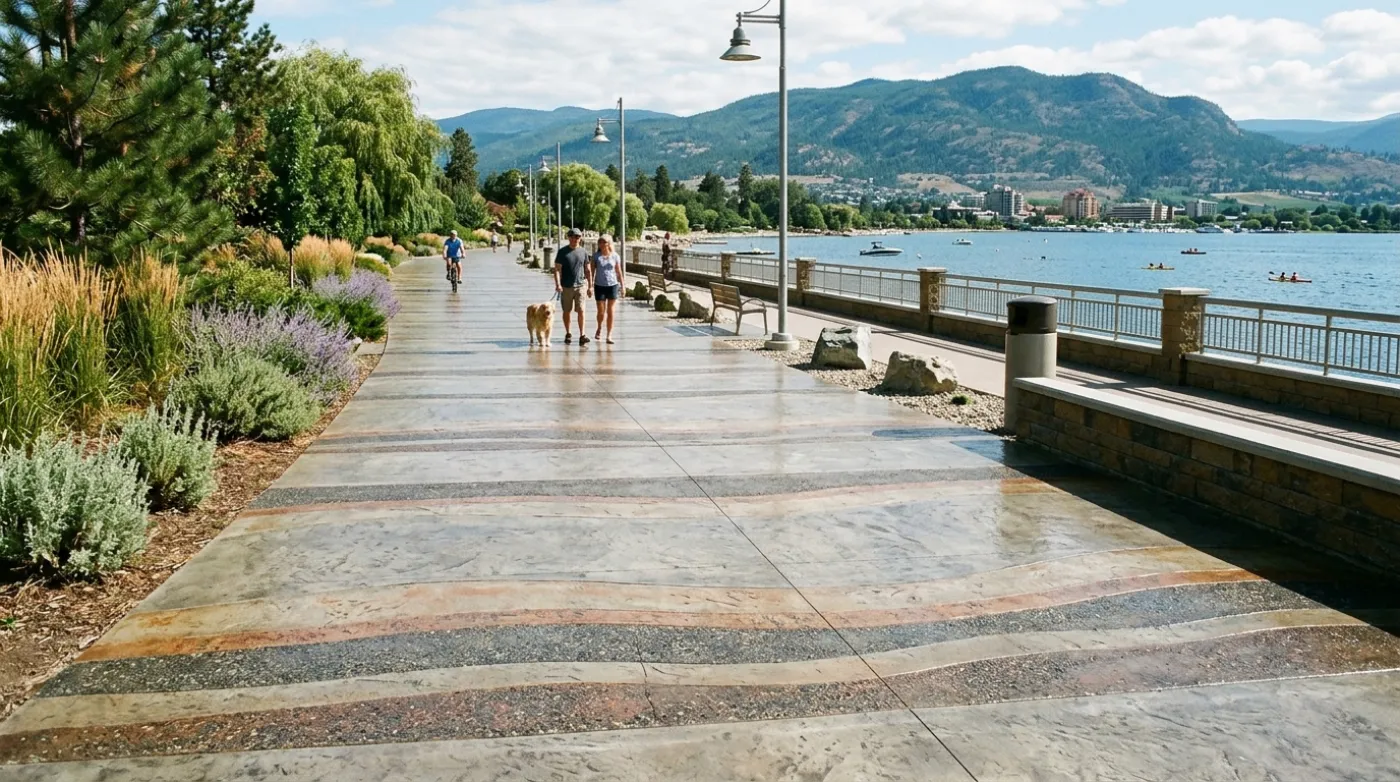
Sidewalk & Walkway Sealing — Commercial & StrataSeal Common-Area Paths Before Scaling Becomes a Trip Claim
High-traffic exterior walkways take the worst of Okanagan freeze-thaw and de-icing salt — and once the surface starts scaling and spalling, you have two problems: it looks neglected, and a cracked, uneven common-area path is a slip-and-trip claim the owner or strata is on the hook for. We keep water and salt out of the slab with a penetrating sealer that slows the breakdown, so your flatwork stays smoother, safer and out of the replacement budget longer.
Free on-site walkthrough — you get a written scope and re-seal cycle to take to your council or owner. No obligation.
Request a Site Assessment
Free walkthrough · Written scope & re-seal cycle · No obligation, RFPs welcome
WorkSafeBC-Covered
Clearance letter with every quote
Licensed & Insured
COI with every quote
10+ Years Local
Sealing Okanagan concrete
Pavix CCC-100
Bridge-deck-grade, lab-tested
The Problem
Why Exterior Walkways Scale, Spall and Crack
Sidewalks, plaza walkways, entry approaches and common-area paths are the most-walked, most-exposed flatwork a property owns. Every winter they take the full brunt of Okanagan weather — meltwater soaks into the surface, then freezes and expands through dozens of freeze-thaw cycles a season. Add the de-icing salt that gets spread on them to keep people upright, and you have the exact recipe for surface scaling, spalling and cracking.
That is two problems in one. The obvious one is appearance: a flaking, pitted walkway makes a plaza or a strata complex look run-down, no matter how well the rest of the property is kept. The expensive one is liability. A scaled, cracked, uneven common-area walkway is a trip-and-fall hazard, and on shared paths it is the owner or the strata corporation that is responsible when someone goes down.
Tearing out and replacing flatwork is costly and disruptive — barricades, dust, closed entries, unhappy tenants. The smarter play is to stop the water and salt from getting into good concrete in the first place, while the walkway still has plenty of service life left.
Who This Is For
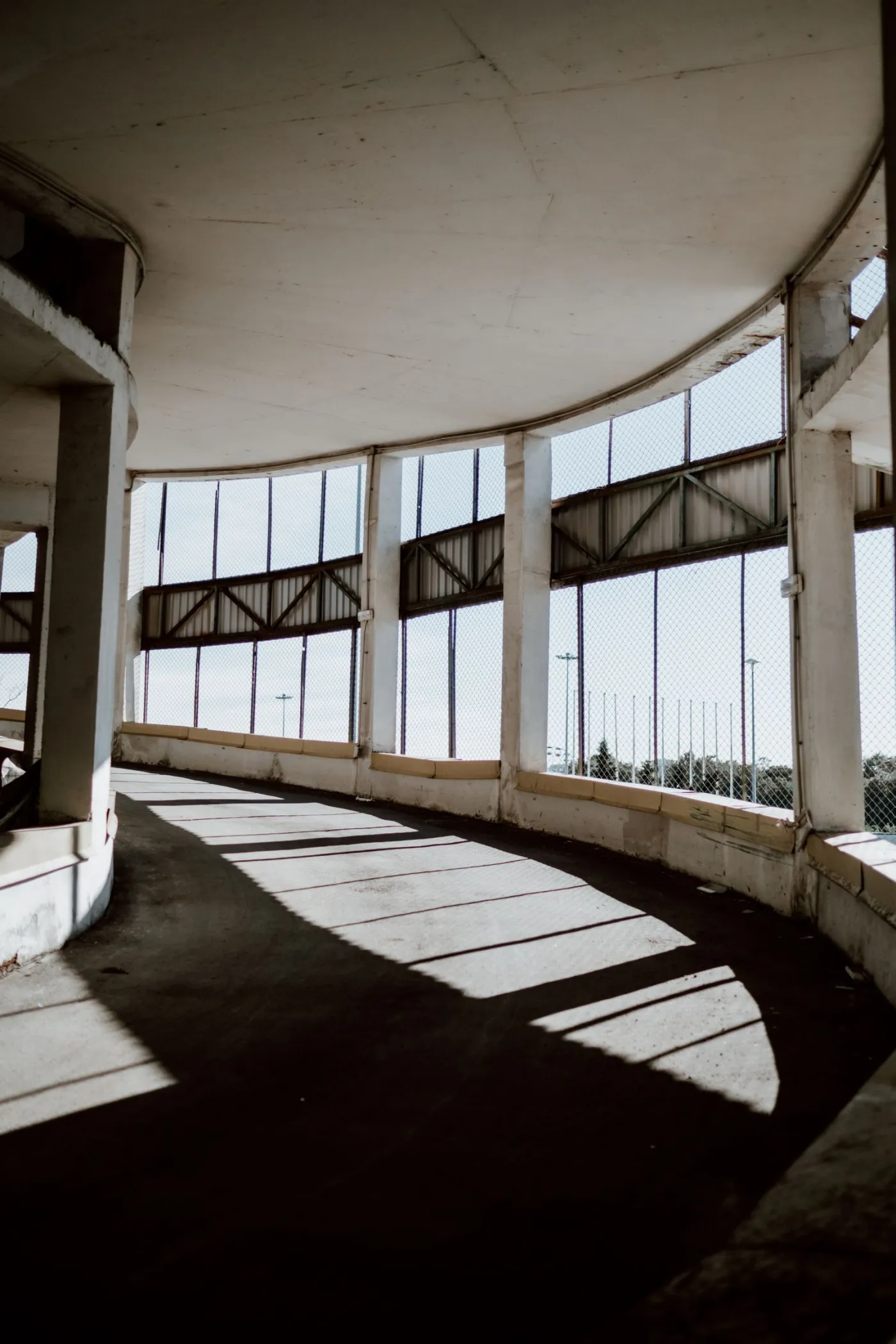
We seal exterior flatwork for commercial property owners with plaza and storefront sidewalks, for strata corporations and property managers responsible for common-area walkways and paths across one or more buildings, and for institutions with public approaches and connecting paths. If you manage shared concrete that people walk on every day, this protects it — and protects you. It pairs naturally with our strata common-area walkways program.
Our Technology
Penetrating Protection That Stays Out of the Way
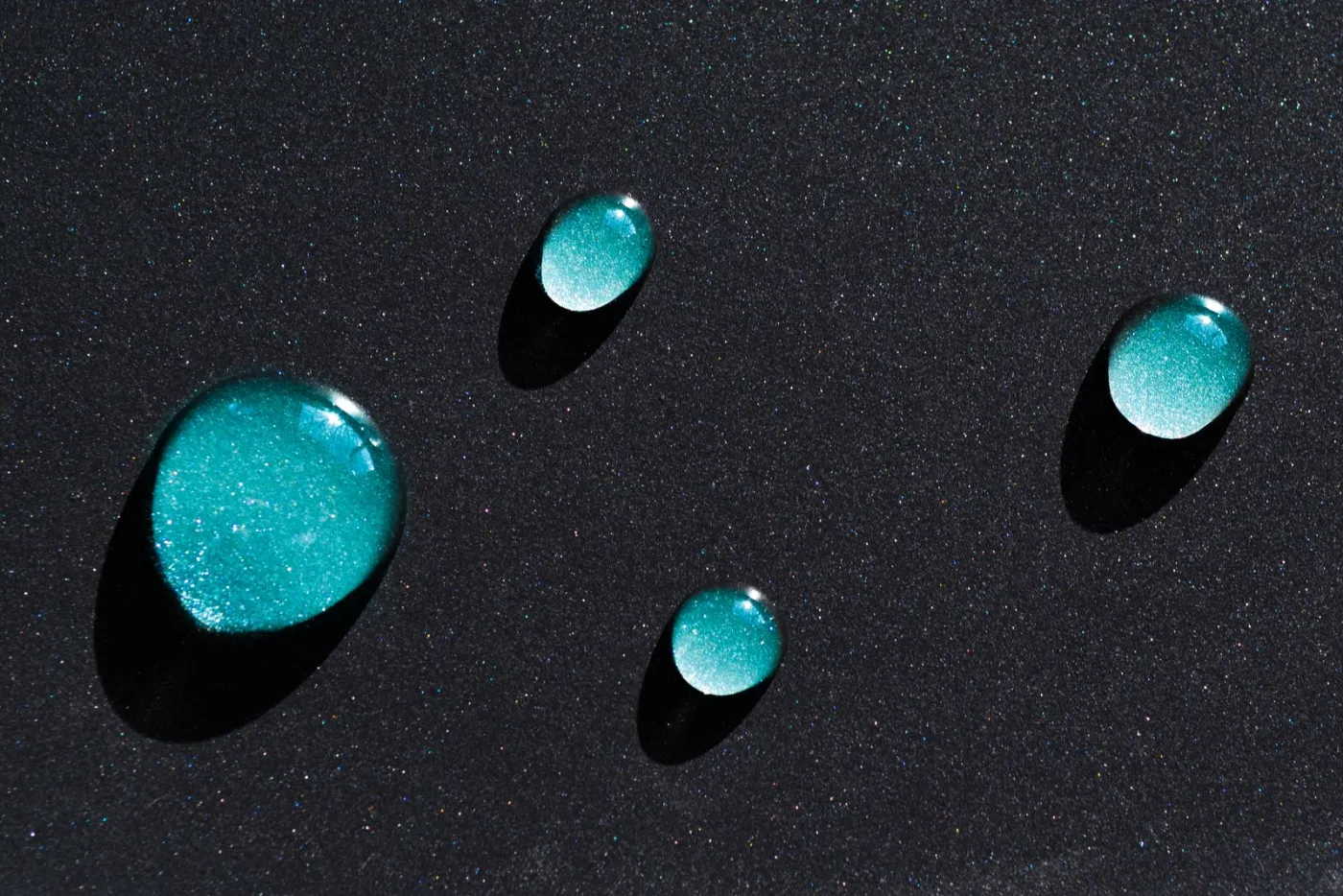
We use Chem-Crete Pavix CCC-100, a penetrating dual-crystalline sealer. Instead of laying a film or membrane on top of the walkway, it soaks into the slab and reacts inside the concrete — keeping water and de-icing salt out of the surface, where they do their damage. There is nothing on top to wear off underfoot, scuff up or peel, which matters on flatwork that thousands of feet cross every week.
By keeping moisture and chloride out of the slab, it slows the freeze-thaw scaling and spalling that breaks walkways down — so paths stay smoother, more even and safer for longer, and the whole run of flatwork earns more service life before it ever needs replacing.
- Keeps water and de-icing salt out of the slab surface
- Slows freeze-thaw scaling and spalling on exterior flatwork
- Keeps walkways smoother and more even — fewer trip hazards over time
- Penetrates and protects from within — nothing to wear off underfoot
- Water-based and non-toxic — safe around pedestrians and landscaping
Our Process
Sealing Walkways Without Closing Them Down
People need their paths. We sequence the work so pedestrians always have a route through — and so a property manager never fields a wave of complaints about blocked entries.
Assessment & Scope
We walk every run of sidewalk, path and entry approach, check surface condition, drainage and salt exposure, and map foot-traffic routes. You get a written scope and a recommended re-seal cycle at no cost.
Section Scheduling
We seal in sections so pedestrians always keep a path through. We work around your busiest foot-traffic windows — early mornings or off-peak for plazas, coordinated entries for stratas — and supply notice templates you can post.
Surface Prep
Walkways are cleaned of dirt, salt residue, gum and debris so the sealer can penetrate. Worn or soiled sections may need pre-treatment for the crystalline reaction to work properly.
Penetrating Application
The water-based sealer is applied and soaks in to react inside the slab. No thick film, no harsh fumes, no slick coating — pedestrians walk on the same concrete surface, now protected from within.
Cure & Reopen
We mark off curing sections clearly, keep the rest of the walkway network open and safe, and bring each run back to use on a published schedule with clear cure-time windows.
Maintenance Program
For strata and commercial clients we set a scheduled re-seal cycle so your walkways stay on a maintenance program — documented for your records and depreciation report, with a reminder when the next pass is due.
Product Authority
Why We Seal With Pavix CCC-100
Exterior flatwork breaks down from the surface in — de-icing salt and trapped meltwater scale and spall the top of the slab, and a pitted, uneven path is the trip-and-fall the owner or strata answers for. So we don't seal a commercial walkway or a strata path with whatever's cheapest on the shelf, and we don't put down a film that wears off underfoot in a season. The product we apply, Chem-Crete Pavix CCC-100, is a penetrating dual-crystalline sealer that keeps water and chloride out of the slab from inside — the same chemistry the manufacturer tests against road salt on highway and bridge concrete. That track record is the manufacturer's, not ours, but it is why we specify it for shared paths that have to stay even and safe and can't be torn out without barricades and disruption.
- Backed by independent, peer-reviewed research. The dual-crystalline technology has been published in peer-reviewed engineering journals (Case Studies in Construction Materials, 2020 and 2021) and studied as a project of the National Concrete Pavement Technology Center at Iowa State University — most consumer sealers have nothing of the kind behind them.
- Made by an established manufacturer. Chem-Crete has developed concrete and pavement protection products since 1969 and now offers more than 120 construction solutions used on roadways, bridges, tunnels and commercial structures.
- Built to keep de-icing salt out of the surface. The manufacturer's lab testing, run to ASTM C1202, reports roughly a 98% reduction in chloride-ion penetration — and chloride from the de-icer spread to keep people upright is the same thing that scales and spalls the walking surface into a trip hazard.
- Engineered for the freeze-thaw that pits a path. Tested to ASTM C666 and C672, the system shows a 94% reduction in surface mass loss after 70 freeze-thaw cycles — surface mass loss is literally the flaking and scaling that turns a smooth walkway uneven — and it is documented to cut deicing-salt demand by 50 to 60%.
- Penetrating, with nothing to wear off underfoot. Pavix is a dual-crystalline penetrating treatment, tested for water permeability to the U.S. Army Corps of Engineers CRD-48-92 method — it protects from inside the slab, so thousands of footfalls a week have no coating or film to scuff up or peel on a high-traffic path.
- Proven on salted, public-traffic concrete. The dual-crystalline system we apply is marketed and used by the manufacturer on highways and bridge decks — salted, heavily trafficked public concrete where surface scaling is a safety problem, not just a cosmetic one.
Performance figures are the manufacturer's published laboratory results, tested to the noted ASTM, AASHTO and U.S. Army Corps of Engineers methods. We are an independent applicator of Pavix CCC-100; these are the product's credentials.
FAQ
Sidewalk & Walkway Sealing Questions
Does sealing stop scaling and spalling on walkways?
It dramatically slows it. Scaling and spalling are driven by water and de-icing salt getting into the slab and then freezing and thawing. The penetrating sealer keeps water and chloride out of the concrete, so the freeze-thaw cycle has far less to work with. It will not reverse damage that is already there, which is why the right time to seal is while a walkway still looks sound — sealing protects good concrete, it does not rebuild failed concrete.
Does it reduce slip and trip liability?
A scaled, cracked, spalling walkway is a trip-and-fall claim waiting to happen, and on common-area paths the owner or strata is the one responsible. By slowing the surface breakdown, sealing keeps walkways smoother and more even for longer, which reduces the hazards that lead to claims. It is not a slip coating or a substitute for proper maintenance and prompt repairs, but it is a documented, proactive step that keeps your flatwork in safer condition between repairs.
Can you keep the walkways open while you work?
Yes. We seal in sections so pedestrians always have a route through. We mark off curing areas, post notice for residents or tenants, and schedule around your busiest foot-traffic windows. For a plaza or storefront we can work early mornings or off-peak; for a strata we coordinate with the property manager so people are never cut off from their entries.
How often does it need to be re-sealed?
Because the protection works inside the slab rather than as a coating on top, it does not wear off underfoot the way a topical sealer does. After a site walkthrough we give you a per-surface re-seal cycle in writing so it slots straight into your maintenance or depreciation budget. Exterior flatwork with heavy salt exposure gets re-checked more often than a sheltered path.
What does walkway sealing cost?
It is priced by square footage, surface condition and access — there is no flat rate. But sealing a run of walkway is a small fraction of what it costs to tear out and replace scaled, spalled flatwork, and a far smaller fraction than settling a slip-and-fall claim. Request a site assessment and we will give you itemized ranges you can take to your council or owner.
*Permeability and chloride-ion performance figures refer to the dual-crystalline sealer technology tested to CRD-48-92.
Protect Your Walkways Before Scaling Turns Into a Claim
A no-cost site assessment gets you a written scope, a recommended re-seal cycle, and itemized ranges you can take to your council or owner. Sealing good flatwork now costs a fraction of replacing scaled concrete — or of settling a trip-and-fall claim. Sealing cures best in dry, above-freezing weather, so booking before fall gets the work done ahead of salt season.