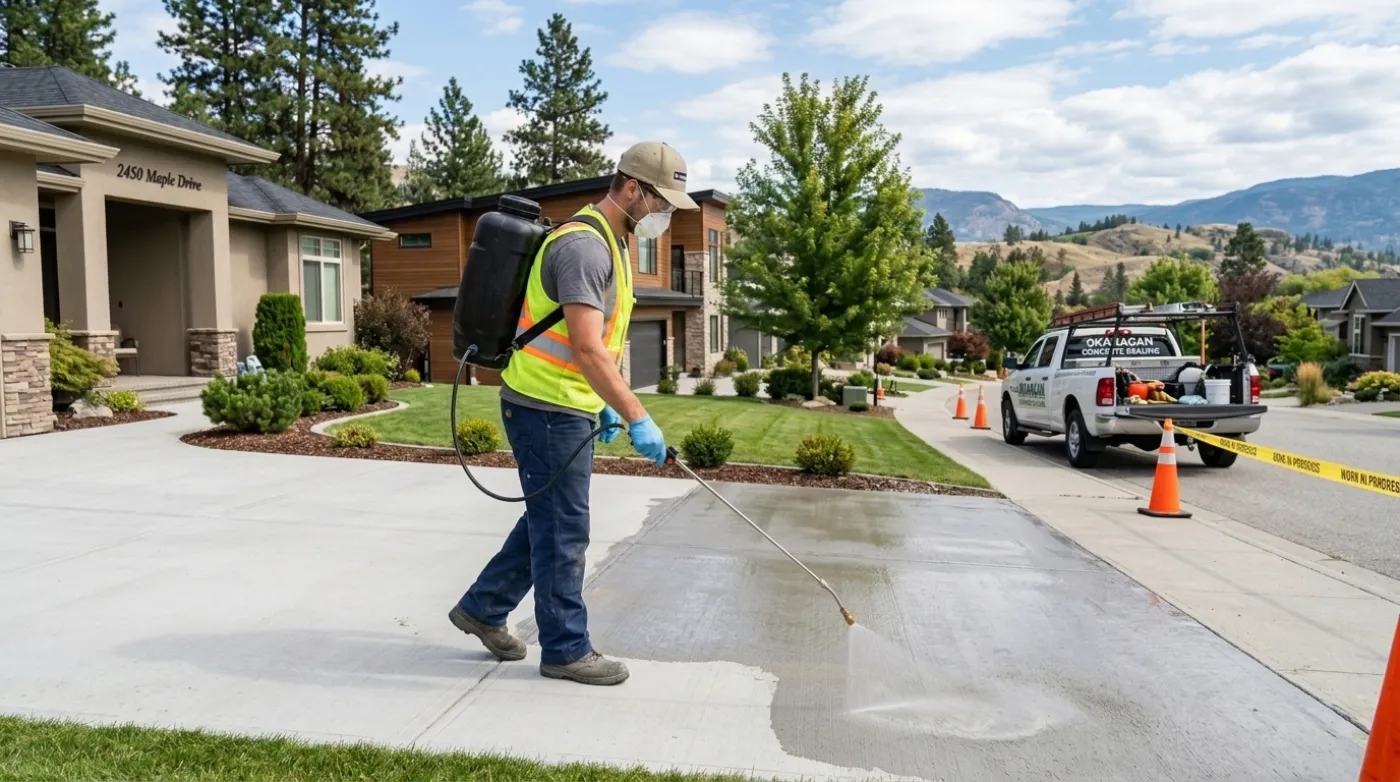
Okanagan Buyer's Guide · Updated July 2026
How to Choose a Concrete Sealing Company in Kelowna
By Mike Romer, Owner · OKGN Concrete Sealing
The Short Version
To choose a concrete sealing company in Kelowna, check eight things: licensed & insured, WorkSafeBC coverage, a penetrating sealer (not the cheapest acrylic), a written warranty, an on-site assessment before any firm price, local Okanagan experience, straight pricing, and real references. That's the whole test. The two fastest ways to fail it? A firm price quoted over the phone, sight-unseen. And a shop pushing cheap topical acrylic in a climate that throws 50 to 80-plus freeze-thaw cycles a year at your concrete.
Before You Hire Anyone
Concrete Sealing Is Easy to Sell and Easy to Get Wrong
Choosing a concrete sealing company comes down to an eight-point checklist: insurance, WorkSafeBC coverage, the right sealer, a written warranty, an on-site assessment, local experience, honest pricing, and references. Here's the problem. From the curb, sealing looks easy — someone shows up, rolls on a product, collects a cheque. That low bar is exactly what attracts the corner-cutters. Hire the wrong one and you get a peeling acrylic film, a slippery pool deck, or nobody answering the phone when the work fails a winter later.
The good news? You don't need to be a concrete expert to hire a good one. You just need to know what a proper company looks like and what to ask. This is the checklist we'd hand a friend — and the same standard we hold ourselves to.
Run every quote through it. The companies worth hiring pass it without breaking a sweat.
The Checklist
The 8-Point Checklist for Hiring a Concrete Sealing Company
This isn't a wish list. It's the baseline. A company worth your money clears every one of these, and the good ones are happy to prove it.
Licensed & insured
This is the floor, not a bonus. You want a real, registered business carrying commercial general liability insurance — and you want to see proof, not just hear the words. If a driveway job cracks a slab, stains your garage, or damages your property and the company isn't insured, that cost lands on you. Ask for a certificate of insurance up front. A legitimate operator hands it over without blinking.
WorkSafeBC coverage
Separate from liability insurance, and just as important. Crews should be covered by WorkSafeBC, with a clearance letter available on request. Without it, a worker who gets hurt on your property can become your liability — a risk most homeowners never think about until it's too late. Strata councils and commercial owners already know to ask for this; you should too.
The right product, not the cheapest
A good company leads with a penetrating sealer that soaks into the slab and lasts years — in the Okanagan that usually means a penetrating crystalline sealer like Pavix CCC-100. A cut-rate outfit leads with a cheap topical acrylic that sits on the surface, peels, and needs redoing every one to three years. Ask what they use and why. The answer tells you whether you're hiring a pro or a price.
A written warranty
"It'll last, don't worry about it" is not a warranty. Get the coverage in writing — what's covered, for how long, and what voids it. A written warranty means the company is willing to stand behind the work after the cheque clears. A verbal promise is worth exactly nothing the day the sealer starts to fail.
On-site assessment & written scope
No honest company gives you a firm price sight-unseen over the phone. The real cost depends on square footage, surface type, condition, and prep. Watch for the classic lowball-then-upsell: a rock-bottom phone quote that jumps once the crew shows up. A real quote follows a look at your actual concrete and comes to you in writing, with the scope spelled out.
Local Okanagan experience
Our concrete lives a hard life — 50 to 80-plus freeze-thaw cycles a year, an intense summer UV index, and winter road salt near the street. A company that works here understands how those forces attack a slab and which products hold up. A national-franchise script run out of a call centre doesn't know Kelowna concrete, and it shows in the results.
Honest, transparent pricing
You should get a clear range up front and a free assessment to firm it up — no vague hand-waving, no fees that appear on the final invoice. Showing pricing in ranges and explaining what drives the number is a sign of a company that isn't hiding anything. Sealing is quoted per project for good reason, but honest is honest.
References & real past work
Ask to see jobs they've actually done — driveways, patios, pool decks in your area. Real work in your climate is the best proof there is. A company proud of its results will happily show them; one that dodges the question is telling you something. Photos and references cost nothing to ask for and save a lot of regret.
Want to understand the product question in item 3 more deeply? Our penetrating vs. acrylic sealer guide walks through which sealer fits which surface, and our concrete sealing cost calculator gives you a ballpark range so a quote can't blindside you. Vetting on behalf of a strata council or commercial property? The same eight checks apply at scale — our commercial concrete sealing page covers COIs, clearance letters, and scheduling for larger sites.
Walk Away If You See These
Red Flags to Avoid
Most bad sealing jobs are predictable — they come from companies that show one or more of these signs before the work even starts. Any single flag is a reason to slow down. Two or more, and you've found your reason to hire someone else.
The most common trap in this trade is the cheap quote. A price that undercuts everyone usually means a bargain topical acrylic that won't survive our freeze-thaw winters — and often no insurance or warranty behind it. Cheap today, expensive the moment it fails.
- No proof of insurance or WorkSafeBC coverage when you ask for it
- Pressure to sign or pay a deposit on the spot
- A quote that's suspiciously cheap — almost always a bargain acrylic that won't last
- A firm price given over the phone, sight-unseen, with no on-site look
- Vague or flat pricing with no explanation of what's included
- No warranty in writing — only a verbal "it'll last"
Print This
Six Questions to Ask Before You Hire a Concrete Sealer
Six questions cut straight through the sales pitch. Ask every company you're considering all six. The answers matter, but so does how fast they come — a pro doesn't have to think about whether they're insured.
- 1Are you licensed and insured — can I see a certificate of insurance?
- 2Are your crews WorkSafeBC-covered?
- 3What sealer do you use — penetrating or topical — and why?
- 4What's the warranty, and is it in writing?
- 5Will you assess my concrete on-site before you quote?
- 6How long will the job last in the Okanagan's freeze-thaw climate?
A company that answers all six clearly and without hedging is one worth trusting with your concrete. Hesitation on any of them — especially insurance, WorkSafeBC, or the warranty — is your cue to keep dialing.
Why Local Experience Matters
Why the Product Matters: 50–80+ Freeze-Thaw Cycles a Year
This isn't a mild coastal climate. Concrete here takes 50 to 80-plus freeze-thaw cycles a year. Water soaks into the pores, freezes, expands, and forces the surface apart — that's the scaling and spalling you see on old, unsealed driveways.
Then summer swings the other way with intense sun and a UV index of 8 to 9 that breaks down binders, plus winter road salt near the street. Three forces working on your slab at once — and a cheap topical film is the first thing to give out under them.
That's why local experience and the right product aren't box-ticking. A company that understands this climate specifies a penetrating sealer that protects from inside the slab, so there's no surface film for the weather to peel. It's the difference between a job that lasts and one you're redoing in two years. Still weighing whether to seal at all? Our guide on whether concrete sealing is worth it in Kelowna runs the freeze-thaw math.

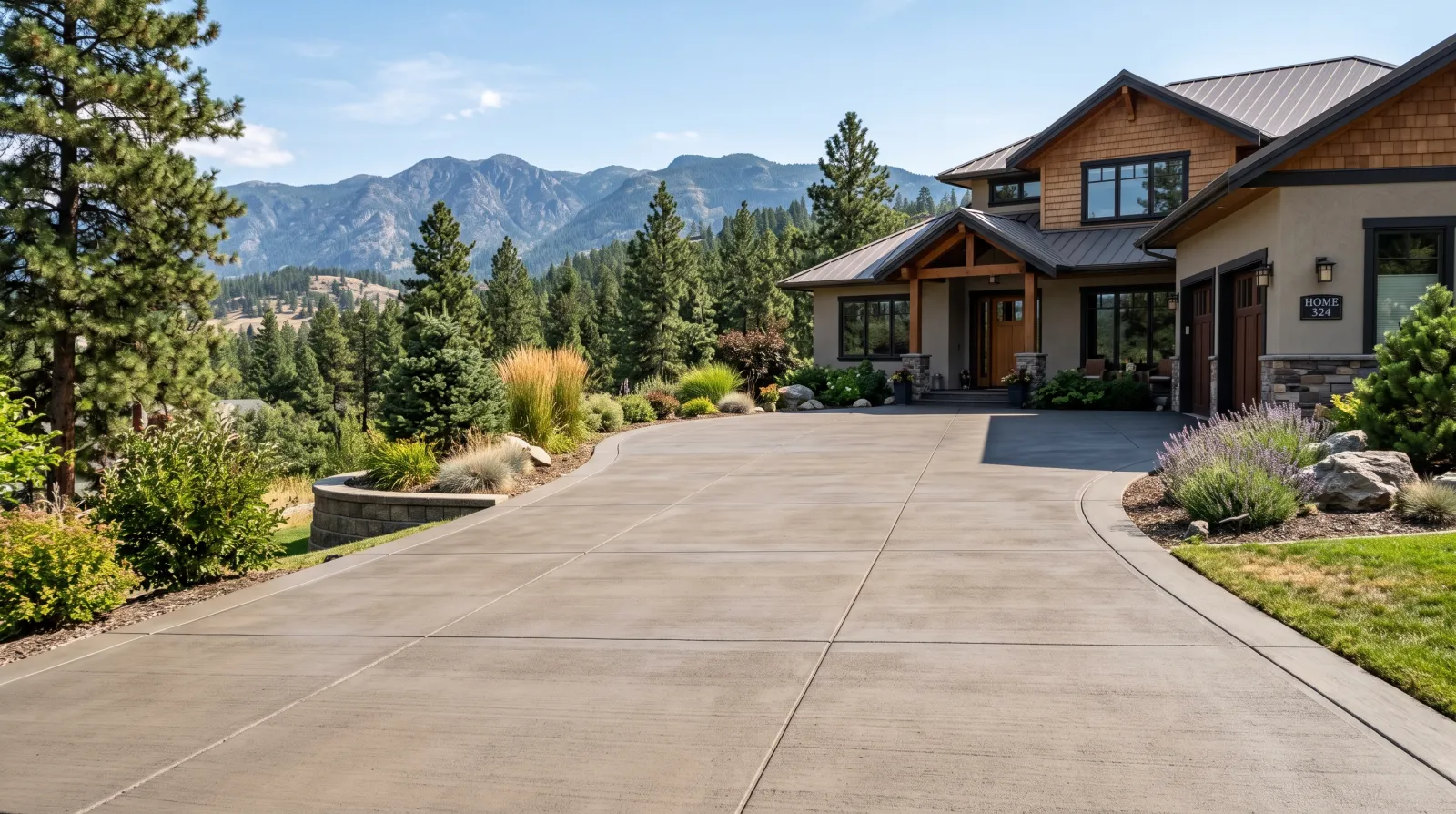
Hold Us to It
Here's the Standard — Us Included
We wrote this guide as the bar to hold any company to, and that includes us. So here's where OKGN lands on the same checklist, plainly:
- Licensed and fully insured — certificate of insurance on request
- WorkSafeBC-covered crews — clearance letter on request
- Leads with penetrating Pavix CCC-100, not a cheap topical film
- 5-year written warranty on the work, spelled out on the quote
- Free on-site assessment and a written quote — no phone lowballs
- Okanagan-local — we know the freeze-thaw, UV, and salt firsthand
We're not the cheapest, and we don't pretend to be. We're built to pass this exact checklist — and we'd rather you use it to vet every quote you get, ours among them. See how we approach concrete sealing in Kelowna and see the full case for why homeowners choose OKGN.
FAQ
Hiring a Concrete Sealer: Common Questions
How do I choose a concrete sealing company in Kelowna?
Start with the non-negotiables: a real registered business carrying commercial general liability insurance, crews covered by WorkSafeBC, and a written warranty. Then look at how they work — a good company assesses your concrete on-site before quoting, leads with a penetrating sealer that lasts years rather than the cheapest topical film, understands the Okanagan's freeze-thaw and UV, and gives you honest, transparent pricing with no hidden fees. If a company checks all of those boxes, you're in safe hands. If it can't produce proof of insurance or a warranty in writing, keep looking.
What should I look for when hiring a concrete sealer?
Eight things: proof of insurance (a certificate of insurance you can actually see), WorkSafeBC coverage with a clearance letter on request, the right product for the job instead of the cheapest one, a written warranty, an on-site assessment and written scope before any firm price, genuine local Okanagan experience, honest pricing, and references or photos of real past work. Any one of these missing is a yellow flag; insurance, WorkSafeBC, and a written warranty missing are hard stops.
Should a concrete sealing company be insured and WorkSafeBC-covered?
Yes — both, without exception. Commercial general liability insurance protects you if their work damages your property, and WorkSafeBC coverage protects you if a worker is injured on your lot. Without WorkSafeBC coverage, an on-site injury can become your personal liability. Any legitimate company will hand you a certificate of insurance and a WorkSafeBC clearance letter on request. If a contractor gets cagey when you ask, treat that as your answer.
Is the cheapest concrete sealing quote the best value?
Usually not. A suspiciously cheap quote almost always means a bargain topical acrylic that sits on the surface and needs redoing every one to three years — and often no insurance or warranty behind it. A penetrating sealer costs more upfront but soaks into the slab and protects for years, so the cost-per-year is lower and there's no film to peel. Cheapest-today frequently turns into most-expensive-over-ten-years. Compare what you actually get, not just the bottom-line number.
How do I know a company is using a good sealer?
Ask them straight: what product do you use, is it penetrating or topical, and why? A company that knows its trade will name the sealer and explain the choice. In the Okanagan, the strongest answer leads with a penetrating sealer such as Pavix CCC-100 that reacts inside the concrete and resists freeze-thaw from within, rather than a cheap acrylic film. If the answer is vague, or it's whatever's cheapest that day, that tells you how the rest of the job will go.
Penetrating or acrylic sealer — which should a company use?
It depends on the surface and the goal, and a good company will explain the trade-off instead of pushing one blindly. Penetrating sealer (like Pavix) is the durability and low-maintenance default — it soaks in, doesn't change the look, and lasts years. Acrylic adds a wet-look sheen for decorative or stamped concrete but needs recoating every one to three years. What matters is that they match the product to your concrete honestly, not that they only ever sell one thing. Our penetrating vs. acrylic guide breaks the choice down in detail.
What questions should I ask before hiring a concrete sealer?
Six quick ones cut through the noise: Are you licensed and insured, and can I see a certificate of insurance? Are your crews WorkSafeBC-covered? What sealer do you use — penetrating or topical — and why? What's the warranty, in writing? Will you assess my concrete on-site before quoting? And how long will the job last in the Okanagan's freeze-thaw climate? Honest, specific answers to all six is what you want. Hesitation or vague replies on any of them is a reason to slow down.
Should I get a quote over the phone or in person?
In person. No one can give you a firm, accurate concrete sealing price sight-unseen — the real cost depends on square footage, surface type, condition, and the prep involved. Watch for the lowball-then-upsell play: a rock-bottom phone number that balloons once the crew is on site. A proper company gives you a ballpark range up front, then confirms it with a free on-site assessment and a written quote. That's how you avoid surprises on the invoice.
What should a concrete sealing warranty cover?
A real warranty covers the work itself — the sealer peeling, flaking, or failing early — with a stated term, in writing, spelled out on the quote. It should also tell you what voids it: some warranties die the first time de-icing salt hits the slab, and you want to know that before winter, not after. For reference, OKGN backs its sealing work with a 5-year written warranty. Whatever company you hire, get the term and the exclusions on paper. A verbal "we guarantee it" isn't a warranty; it's a sales line.
What should be included in a written concrete sealing quote?
Six things at minimum: the surface prep involved, the actual product named — penetrating or acrylic, not just "sealer" — the number of coats or coverage, the square footage, the warranty terms, and the price. A proper quote reads like a scope of work, not a number on a napkin. If a quote is vague on the product or skips prep entirely, that's a red flag: prep is where cheap jobs cut corners, and an unnamed "sealer" usually means whatever was on sale that week.
How much experience should a concrete sealing company have?
Enough local, freeze-thaw-specific experience to match the product to your surface — that matters more than any big number on its own. Ask how long they've worked in the Okanagan and for examples of jobs like yours: same surface, same climate. A crew that has sealed hundreds of local driveways knows what 50 to 80-plus freeze-thaw cycles do to a slab; a crew new to the market is learning on yours. (For the record: OKGN is 10+ years local with 233 completed projects.)
Vetting Quotes? Put Us on the List.
We'll come look at your concrete, give you a straight answer on the right product, and put a firm price in writing — free, no obligation, no pressure. Hold us to the checklist.