Strata & Property Manager Concrete Sealing — Kelowna & the Okanagan
Seal Your Strata's Parkades & WalkwaysBefore They Become a Special Levy
We seal and maintain shared concrete for stratas and property-managed buildings across the Okanagan — parkades, common-area walkways, entry aprons and shared patios. Scheduled re-seals on a cycle your council can budget for, with work planned around your residents.
Free on-site walkthrough — you get a written scope and re-seal cycle to take to your council. No obligation.
Request a Site Assessment
Free walkthrough · Written scope & re-seal cycle · No obligation, RFPs welcome
WorkSafeBC-Covered
Clearance letter with every quote
Licensed & Insured
COI with every quote
10+ Years Local
Sealing Okanagan concrete
Pavix CCC-100
ASTM-tested, infrastructure-grade
The Stakes
Deferred Concrete Maintenance Is a Bill That Only Gets Bigger
Shared concrete is one of the largest assets a strata owns, and it takes the most abuse. Okanagan winters cycle above and below freezing dozens of times a season. Water gets into hairline cracks, freezes, expands, and pries them open. Add the road salt and ice-melt that gets tracked across entry aprons and down into the parkade, and you have the two fastest ways to destroy concrete working at the same time.
Unsealed concrete absorbs all of it. What starts as surface scaling on a walkway turns into spalling, exposed aggregate, and eventually structural repair. In a parkade, water and salt that reach the rebar mean membrane failure and deck repairs that run into five and six figures.
Here is the part that matters to a council: none of that damage announces itself on your schedule. It shows up in a depreciation report, in a slip-and-fall claim on a cracked common-area walkway, or in a contractor's quote for a repair that a routine seal coat would have prevented. Deferred maintenance does not save money. It moves the cost to a future fiscal year and adds a multiplier — usually paid for by a special levy that no owner wants to vote for.
Why Scheduled Sealing
Sealing on a Cycle Is Asset Protection, Not an Expense
Concrete sealing is preventive maintenance. Done on a regular cycle, it keeps water and salt out of the slab, slows freeze-thaw damage, and extends the service life of the concrete by years — which is exactly what a reserve fund is meant to do. For a strata, the advantage of a schedule is predictability.
It belongs in the budget
A re-seal cycle is a known, recurring line item, not a surprise. That makes it easy to plan against your contingency reserve fund and easy to justify to owners.
It supports your depreciation report
A documented maintenance cycle on shared concrete is exactly the kind of proactive upkeep a depreciation report assumes — and it helps defend your reserve-fund planning under the Strata Property Act.
It limits special levies
Scheduled prevention is the cheapest line on the page. Emergency repair is the most expensive. A maintenance cycle keeps you on the cheap side of that line.
It reduces liability
Sealed, maintained walkways and aprons stay smoother and crack slower — fewer trip hazards on common property the strata is responsible for.
We will give you a recommended re-seal cycle for each surface on your property, in writing, so your council has the numbers it needs to plan.
What We Seal
Every Shared Concrete Surface on Your Property
Multi-building strata sites have very different surfaces, and they do not all take the same product. A residential driveway sealer does not belong on a traffic deck. We spec the right system for each surface and the traffic it carries.
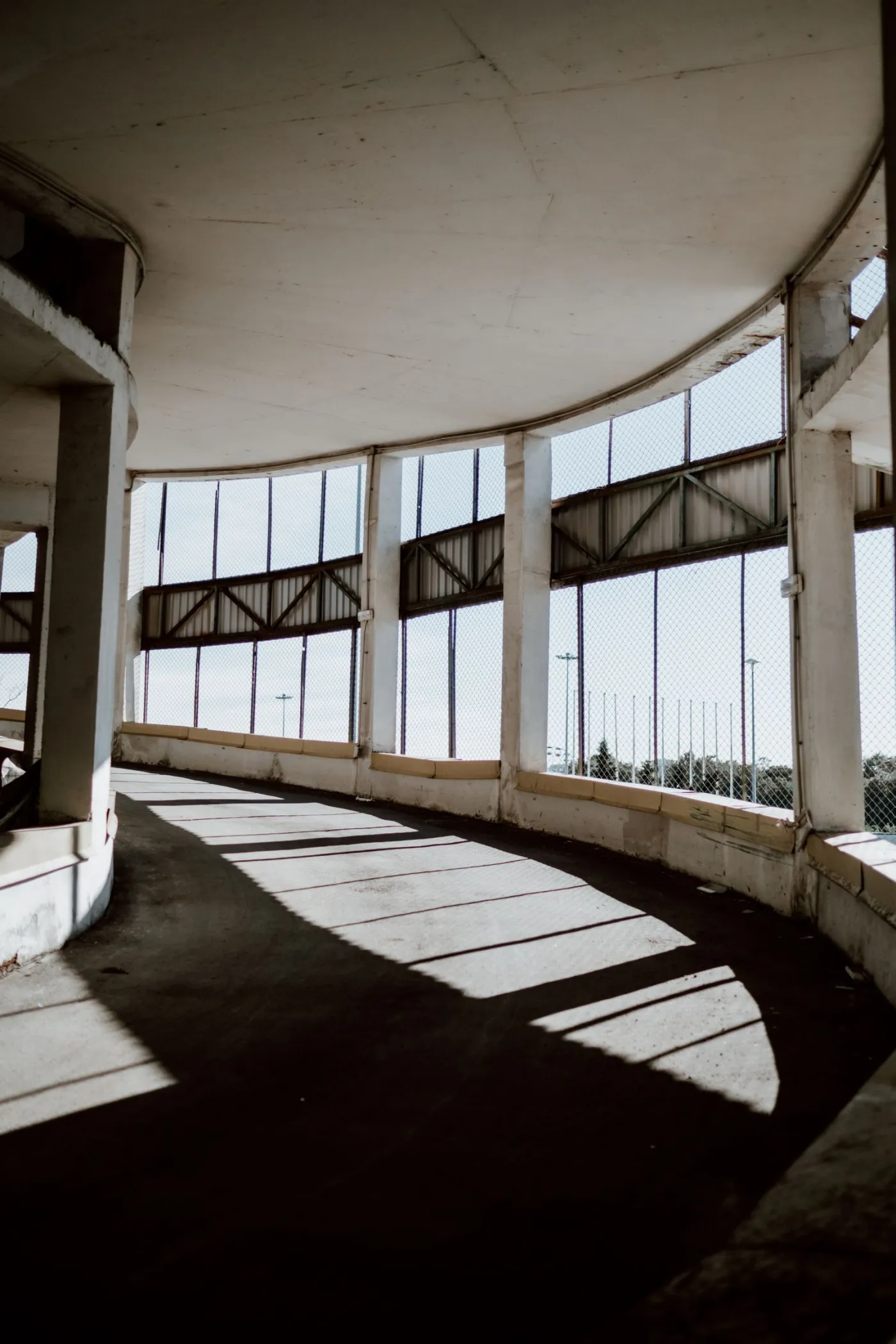
Parkades & Parking Decks
The highest-value, highest-risk concrete you manage. Vehicle traffic, salt carried in on tires, and standing water all attack a parkade slab and any waterproofing below it. We protect parking decks with penetrating crystalline waterproofing rated for parking structures.
See our parkade sealing scopeCommon-Area Walkways
The surfaces your residents and visitors use every day, and the ones most likely to generate a liability claim if they crack or scale. Sealing keeps walkways intact and limits the freeze-thaw cracking that creates trip hazards on common property.
Shared Patios & Courtyards
Common-area patios, courtyards and pool decks across your buildings. Sealing protects the finish, resists staining, and keeps these amenity spaces looking maintained — which residents notice and owners appreciate at the AGM.
Entry Aprons & Drive Lanes
The concrete that takes the most salt and ice-melt all winter, right at every entrance and exit. These surfaces fail first when they are left bare. Sealing them is the cheapest insurance on the property.
Our Process
We Work Around Your Residents, Not Over Them
The fastest way to generate complaints to a property manager is a contractor who blocks a parkade with no notice. We plan the job around the people who live there.
Site Assessment
We walk the property with you, identify every concrete surface, assess condition, and note access, drainage and traffic patterns. You get a written scope and a recommended maintenance cycle — at no cost.
Scope & Quote for Your Council
We provide a clear, itemized quote your council can review and approve, with surfaces and products broken out so there are no surprises. If you have an RFP or spec sheet, we respond to it directly.
Scheduling & Resident Notice
We sequence the work so residents keep access — sealing one section or one parkade level at a time, with clear cure-time windows. We can supply notice templates for you to post, and schedule around tight access windows.
Application & Cure
Proper surface prep, the right product for each surface, applied by our crew. We mark off cured areas clearly and keep the site safe and accessible throughout.
Documentation & Re-Seal Reminder
You get documentation of the work for your records and your depreciation report, plus a reminder when the next re-seal is due — so it never slips off the budget.
Why OKGN
A Local Contractor That Understands How Stratas Actually Work
We are not a national franchise that shows up, sprays, and leaves. We are an Okanagan concrete sealing company that has worked here for 10+ years, on this region's specific freeze-thaw and road-salt conditions.
- We know strata realities. Budgets, fiscal years, depreciation reports, reserve funds and the way a council makes decisions. We write quotes you can actually take to a meeting.
- We screen out clean. WorkSafeBC-covered and fully insured. We provide our insurance certificate and WorkSafeBC clearance letter with every quote — because we know you have to vet us before your council will sign.
- We use the right product for the surface. Traffic decks, walkways and patios each get a system rated for their use, not a one-size sealer.
- We are built for repeat work. A scheduled re-seal relationship is exactly the kind of work we want. One property, then the rest of the portfolio.
Managing concrete beyond your strata too? See our full range of commercial & strata concrete sealing services across the Okanagan.
FAQ
Property Manager FAQ
Are you WorkSafeBC-covered and insured? Can you provide proof?
Yes. We are WorkSafeBC-covered and fully insured. We provide our insurance certificate and WorkSafeBC clearance letter with every quote, so you have what you need to clear us with your council.
How does concrete sealing fit into our depreciation report and reserve fund?
A scheduled re-seal cycle is exactly the kind of proactive maintenance a depreciation report assumes for shared concrete. We give you a recommended cycle in writing and documentation after each job, so your records support your reserve-fund planning and the upkeep expectations under the Strata Property Act. We are happy to provide cost figures your depreciation provider can build into the report.
Do you respond to RFPs and provide a detailed scope?
Yes. Submit your RFP or spec sheet and we will respond to it directly with an itemized scope, products by surface, and pricing your council can review line by line. If you do not have an RFP, our site assessment produces the scope for you.
How do you schedule work without disrupting residents?
We sequence the job so residents keep access — one parkade level or one section at a time, with clear cure-time windows and posted notice. We can supply resident notice templates and arrange work around tight access windows.
How often should our concrete be re-sealed?
It depends on the surface and the traffic it carries — a parkade deck wears faster than a courtyard patio. After the site assessment we give you a per-surface re-seal cycle, in writing, so it goes straight into your maintenance budget instead of being a guess.
What does a strata project cost?
Strata work is priced by surface, square footage, condition and the product each surface needs, so there is no flat number — but a scheduled seal coat is a small fraction of the cost of repairing a failed deck or replacing scaled concrete. Request a site assessment and we will give your council itemized numbers to budget against.
Product Authority
Why We Seal With Pavix CCC-100
We don't seal a parkade or a strata deck with whatever's cheapest on the shelf. The product we apply, Chem-Crete Pavix CCC-100, is a penetrating dual-crystalline sealer built for infrastructure-grade concrete — bridge decks, highways and airport pavements — not just driveways. That track record is the manufacturer's, not ours, but it's why we specify it for shared concrete that has to last and can't be easily torn up and replaced.
- Backed by independent, peer-reviewed research. The dual-crystalline technology has been published in peer-reviewed engineering journals (Case Studies in Construction Materials, 2020 and 2021) and studied as a project of the National Concrete Pavement Technology Center at Iowa State University — most consumer sealers have nothing of the kind behind them.
- Made by an established manufacturer. Chem-Crete has developed concrete and pavement protection products since 1969 and now offers more than 120 construction solutions used on roadways, bridges, tunnels and commercial structures.
- Built for chloride and road-salt exposure. The manufacturer's lab testing, run to ASTM C1202, reports roughly a 98% reduction in chloride-ion penetration — the mechanism behind rebar corrosion and spalling in heated, salted parkades.
- Engineered for freeze-thaw. Tested to ASTM C666 and C672, the system shows a 94% reduction in surface mass loss after 70 freeze-thaw cycles, and is documented to cut deicing-salt demand by 50 to 60%.
- Penetrating, not a surface film. Pavix is a dual-crystalline penetrating treatment, tested for water permeability to the U.S. Army Corps of Engineers CRD-48-92 method — it works inside the slab rather than forming a coating that peels and needs recoating.
- Used on infrastructure concrete. The same dual-crystalline system we apply is marketed and used by the manufacturer on bridge decks, highways and airport pavements across North America and abroad.
Performance figures are the manufacturer's published laboratory results, tested to the noted ASTM, AASHTO and U.S. Army Corps of Engineers methods. We are an independent applicator of Pavix CCC-100; these are the product's credentials.
Get a Maintenance Plan Your Council Can Approve
A no-cost site assessment gets you a written scope, a recommended re-seal cycle, and itemized numbers you can take straight to your next council meeting. No obligation, no pressure — just the information you need to make the case for protecting the asset before it costs more. Sealing cures best in dry, above-freezing weather, so booking before fall gets the work done ahead of salt season.
Serving strata corporations and property managers in Kelowna, West Kelowna, Vernon, Penticton, Lake Country and Summerland. WorkSafeBC-covered. Licensed & insured. COI on request.