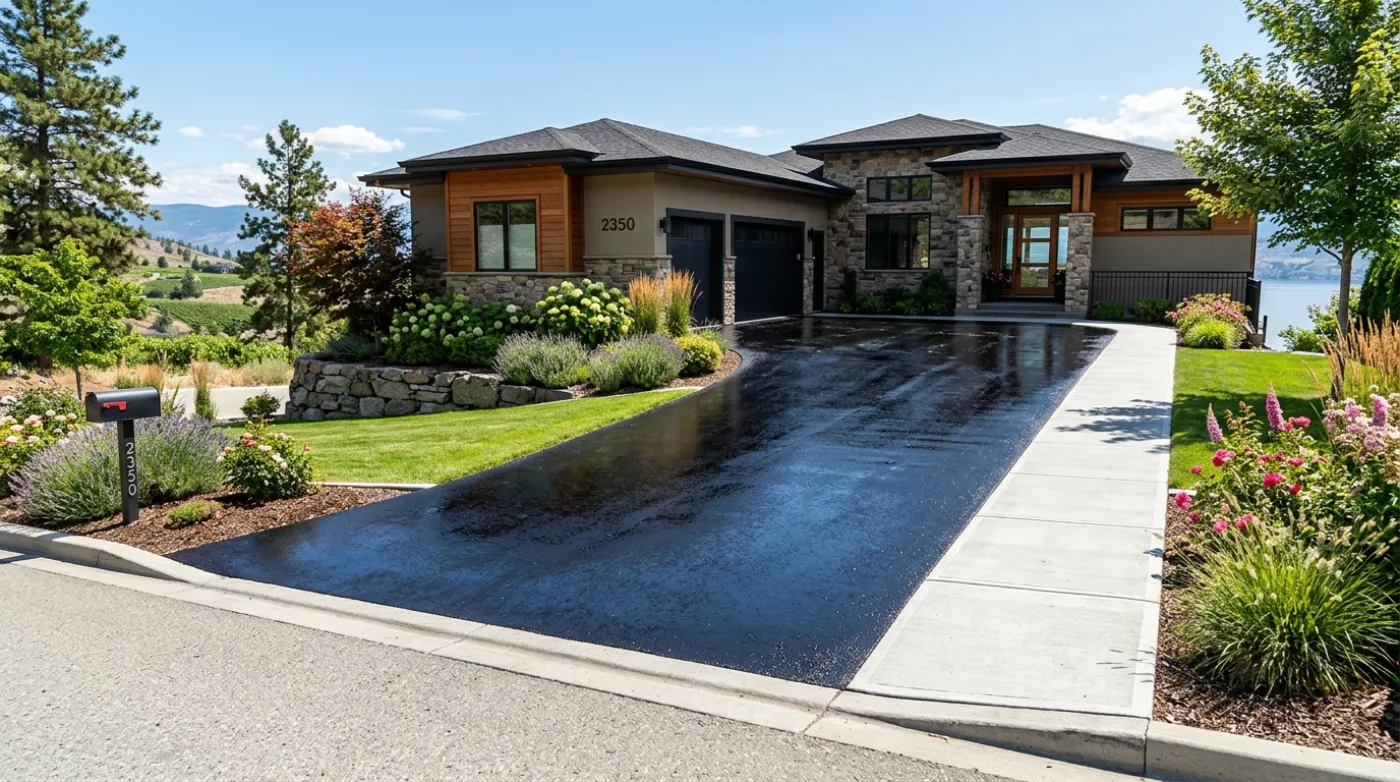
Asphalt Sealing & Driveway SealcoatingKelowna & the Okanagan
Blacktop takes a beating out here. The sun oxidizes it grey and brittle, water works into the surface, and every freeze-thaw cycle pries it apart. Sealcoating puts a protective coat back on—for driveways and parking lots alike.
Get Your Free Quote
No obligation · Same-day response · 100% local
50-80+
Freeze-Thaw Cycles/Year
1,943
Sunshine Hours (UV on Blacktop)
Black
Finish Restored
Both
Driveways & Parking Lots
A Separate Service
Asphalt Sealcoating, Not Concrete Sealing
This is our asphalt service, and it's its own thing. Sealcoating is a topical protective coat we roll onto blacktop—asphalt driveways and parking lots—to restore the black finish and shield the surface.
Asphalt ages from the top down. UV bakes the binder out of it, water works into the surface, and freeze-thaw cracks it open. A sealcoat slows all of that down. It's the cheapest way to protect pavement you already paid to install.
It is not the same as our concrete driveway sealing, which uses a penetrating sealer that soaks into a concrete slab. Different material, different product. If you're not sure which one you have, keep reading—there's a section below that clears it up.
Why Blacktop Fails Here
What the Okanagan Does to Asphalt
Between the sun, the water, and the winter freeze-thaw, unsealed asphalt breaks down faster than most people expect.

Freeze-Thaw
Water Intrusion

UV Oxidation
UV Oxidation
Okanagan sun—1,943 sunshine hours a year—bakes the oils out of asphalt. It fades from black to grey, dries out, and gets brittle enough to crack under everyday traffic.
Water & Freeze-Thaw
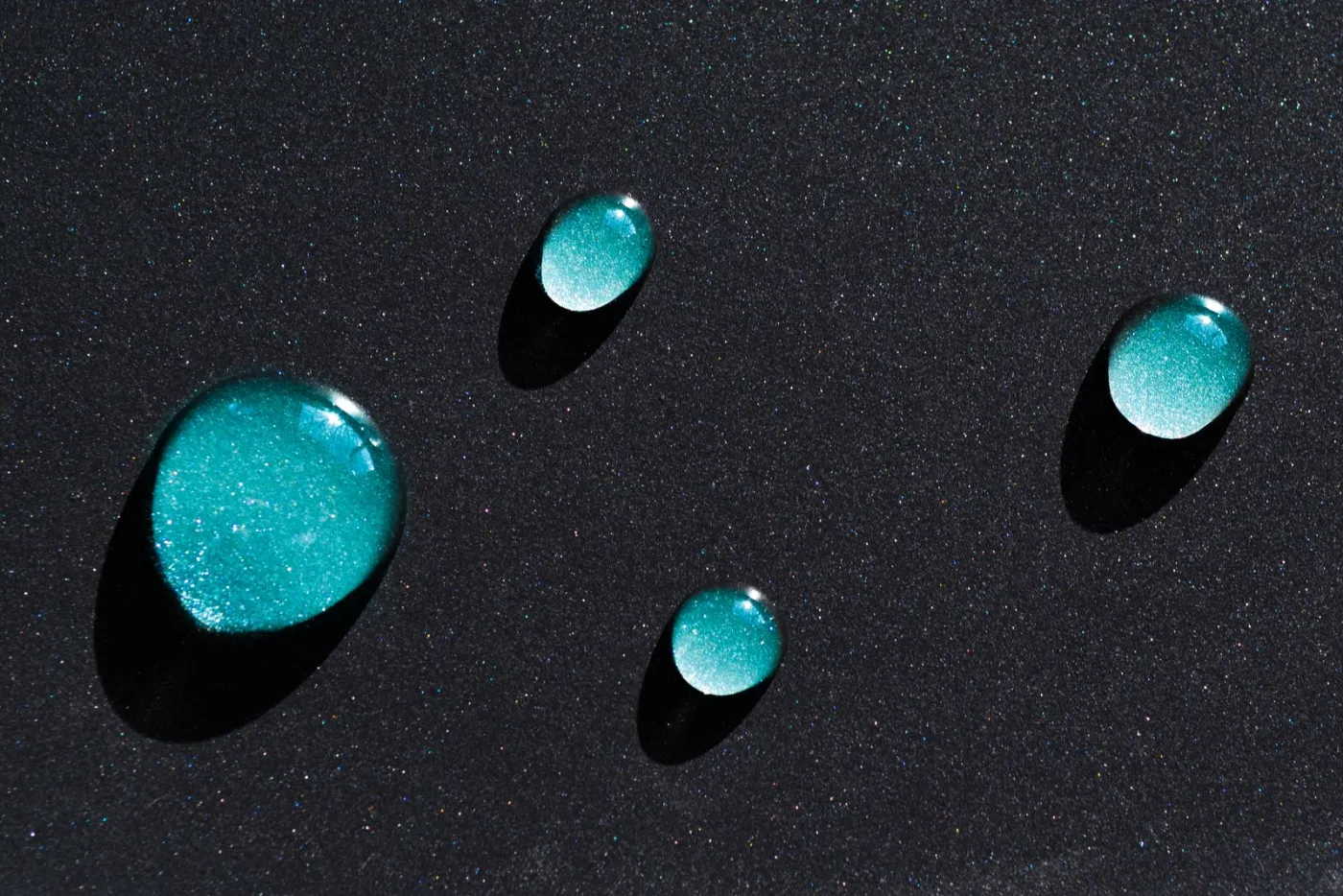
Once the surface opens up, water seeps in, freezes overnight, and expands. With 50-80+ freeze-thaw cycles a year, that's what turns hairline surface wear into real cracking.
Oil & Gas Softening
Asphalt is petroleum-based, so oil, gas, and transmission fluid soften and dissolve it. Left unsealed, every drip eats down into the surface and leaves soft, failing spots.
What It Does
What Sealcoating Actually Does for Your Pavement
Sealcoat isn't magic and it isn't a repair. It's a protective coat—a layer of defense between your asphalt and everything the Okanagan throws at it.
| Benefit | What It Means |
|---|---|
| Restores Black Finish | Faded grey blacktop comes back to a rich, even black |
| Seals Against Water | Blocks the water intrusion that feeds freeze-thaw cracking |
| Shields From UV | Slows the oxidation that dries out and embrittles asphalt |
| Extends Pavement Life | Keeps asphalt flexible and protected for longer |
| Resists Oil & Fuel | A sealed surface soaks up fewer drips and stains |
| Easier to Clean | Sweeps and washes clean instead of holding dirt |
Two Jobs, One Crew
Driveways & Parking Lots
We sealcoat both. The product is the same idea; the priorities are a little different.
Residential Driveways
For a home, it's about curb appeal and protection. A fresh black driveway lifts the whole front of the house, and the coat underneath is quietly protecting your pavement from the sun and the winter.
- Restores that just-paved black look
- Protects against UV, water, and freeze-thaw
- Resists oil drips from vehicles
- A fraction of the cost of repaving
Commercial Parking Lots
For a lot, it's about protecting the asset and keeping the property looking sharp. A worn, grey lot reads as neglected; a sealed one reads as maintained. We schedule the work to keep the lot usable and minimize disruption.
- Protects a high-value paved asset
- Professional, maintained appearance
- Scheduling that minimizes disruption
- Licensed, insured, WorkSafeBC-covered crews
Our Process
How We Sealcoat Asphalt
Sealcoating is straightforward, but the prep and the timing are what make it last. Rush either one and the coat won't bond.

Clean & Prep
We clear debris, pull weeds out of the joints, and clean the surface so the sealcoat can grip. This is also where I flag any cracks or damage that need addressing first—I don't fill cracks, but I'll point them out straight up.
Dry Surface
Sealcoat only bonds to dry, clean asphalt. We time the job to dry weather and make sure the surface is fully dry before anything goes down.
Apply Sealcoat
We lay down an even protective coat across the whole surface, with careful edge work along borders and transitions so nothing gets missed.
Cure
Fresh sealcoat needs to cure before it takes traffic. We tell you exactly how long to stay off it based on the weather that day.
One thing to be clear on: we sealcoat, we don't do crack repair or crack-filling. Sealcoat is protective maintenance, not a fix for broken pavement. If your asphalt has cracks, potholes, or real damage, we'll flag it so it can be handled first—we won't just coat over it.
Make Sure You're on the Right Page
Asphalt Sealcoating Is Not Concrete Sealing
People mix these up all the time, and it's an easy mistake. Here's the quick test: asphalt is black (blacktop), soft in the heat, and laid down in one continuous surface. Concrete is grey, hard, and poured in slabs with control joints between them.
This page is for asphalt. If your driveway is grey concrete, you want our concrete sealing instead—that's a penetrating sealer that soaks into the slab, a totally different product and process.
FAQ
Asphalt Sealcoating Questions
01How often should I reseal my asphalt driveway?
+
There's no single magic number—it depends on the age of the asphalt, how much sun and traffic it takes, and its current condition. As a rule of thumb, resealing every few years keeps blacktop protected against water and UV. I'll look at your driveway and tell you honestly whether it needs a coat yet or can wait.
02What's the best time of year to sealcoat asphalt in the Okanagan?
+
Warm, dry weather. Late spring through early fall is the window—the surface needs to be dry and temperatures need to stay warm enough for the sealcoat to cure properly. We won't sealcoat in the cold or on damp asphalt because it won't bond.
03How long before I can drive on freshly sealed asphalt?
+
Fresh sealcoat needs time to cure before traffic. Plan on keeping vehicles off it for at least a day, longer in cooler or humid weather. I'll give you exact timing for your job based on the conditions the day we seal.
04Do you sealcoat commercial parking lots or only driveways?
+
Both. We sealcoat residential asphalt driveways and commercial asphalt parking lots. Our crews are licensed, insured, and WorkSafeBC-covered, and we schedule commercial work to keep your lot usable and minimize disruption.
05Do you fill cracks before sealcoating?
+
No. We don't do crack repair or crack-filling. Sealcoat is a protective topcoat, not a repair. If your asphalt has cracks, potholes, or damage, we flag it so it can be handled first—sealing over broken asphalt just hides the problem.
06Is asphalt sealcoating the same as concrete sealing?
+
No. Asphalt sealcoating is a topical protective coat applied to blacktop. Concrete sealing uses a penetrating sealer that soaks into a concrete slab. Different material, different product, different trade. If you have a concrete driveway, you want our concrete sealing service instead.
07Will sealcoating fix bad cracking or potholes?
+
No. Sealcoating is protective maintenance for asphalt that's still in decent shape—it slows down aging, it doesn't rebuild a failing surface. If your asphalt is badly cracked, sunken, or full of potholes, that needs a paving contractor first. We'll tell you straight if that's where yours is at.
08How is this different from the Pavix sealer you use on concrete?
+
Our concrete work uses Pavix CCC-100, a penetrating crystalline sealer that becomes part of a concrete slab. Asphalt is a different material entirely—blacktop gets a topical sealcoat that sits on the surface and protects it from water, sun, and oil. We keep the two services separate because they aren't interchangeable.
Protect Your Blacktop Before It Cracks
Driveway or parking lot, a sealcoat is cheap insurance against the sun and the winter.
Free quote. No obligation. Local crew.