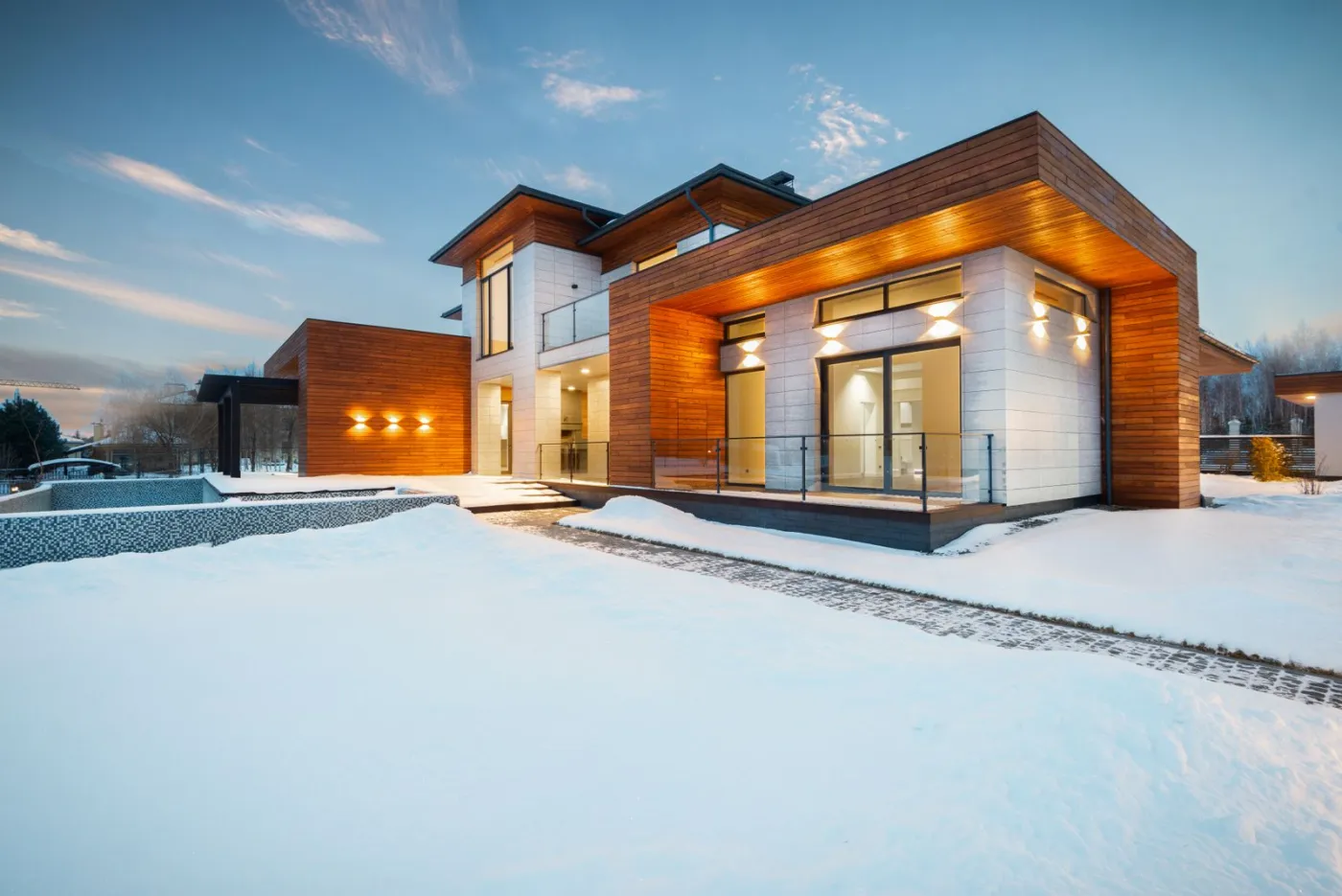
North Okanagan · Climate & Concrete
Freeze-Thaw Concrete Damage in Vernon
By Mike Romer, Owner · OKGN Concrete Sealing · Environment Canada & Climate Atlas data
Quick Answer
Vernon has the coldest, snowiest winters in the Okanagan: about 145 frost days a year, a mean January temperature of −3.9°C, and a record low of −38.9°C (Environment Canada, Vernon Coldstream Ranch). More snow means more meltwater soaking into concrete and more road salt tracked onto it — and the North Okanagan's deeper cold drives freeze-thaw fractures further into the slab. Penetrating sealing is even more important here than in the milder South Okanagan.
The Numbers
Vernon's Winter, by the Data
Vernon anchors the North Okanagan, and its concrete faces the toughest winter of anywhere we work. Environment Canada's Coldstream Ranch station records a mean January temperature of −3.9°C, a record low of −38.9°C, and roughly 500mm of annual precipitation — including about 117cm of snow, nearly twice what Penticton gets an hour and a half south.
That extra snow matters for concrete in two ways. First, every thaw sends meltwater into the slab, and more snow means more water available to freeze inside it. Second, more snow means more winter road salt, which accelerates surface scaling and attacks embedded steel. Vernon concrete is fighting cold, water, and salt at once.
Vernon's own weather record actually varies with siting — the valley-bottom Coldstream Ranch station runs colder (about 145 frost days) than the bench-level Bella Vista station up the hill. We use the Coldstream Ranch figures because they reflect the harder winter most Vernon slabs actually see.
Vernon, BC — Climate Normals
Station: Vernon Coldstream Ranch · 1981–2010
| Frost days per year (≤ 0°C) | ~145 |
|---|---|
| Mean January temperature | -3.9°C |
| Coldest on record | -38.9°C (December 1968) |
| Annual snowfall | ~117 cm |
| Annual precipitation | ~500 mm |
Why It Matters
What This Does to Vernon Concrete
Deeper cold pushes the freeze line further into concrete, so freeze-thaw fractures in Vernon can run below the surface rather than just scaling the top. Combined with the North Okanagan's heavier snow and salt load, an unsealed Vernon driveway can deteriorate noticeably faster than one in the South Okanagan — which is exactly why sealing here pays off.
Whether it's an established property downtown, a lakeside slab at Okanagan Landing, or a newer driveway out toward Predator Ridge and Coldstream, Vernon concrete takes a harder winter than the rest of the valley — and benefits most from being sealed before the cold sets in.
The Mechanism
How Freeze-Thaw Actually Breaks Concrete
It isn't the cold that cracks concrete — it's the water inside it. Here's the three-step process that repeats every time Vernon crosses the freezing point.
Water soaks in
Concrete is porous. Rain, snowmelt and groundwater seep into the pores and capillaries of an unsealed slab and sit there.
It freezes & expands
When the temperature drops below 0°C, that trapped water freezes and expands about 9%, pushing outward on the surrounding concrete with real force.
The surface fails
One cycle is harmless. Repeated dozens of times a year, the pressure fatigues the surface — first scaling, then pitting, then spalling that exposes aggregate and rebar.
The fix is to remove step one. A penetrating sealer like Pavix CCC-100 soaks up to half an inch into the slab and fills those pores, so water can't get in and freeze in the first place. No water inside the concrete means no freeze-thaw damage — and because it's not a surface film, there's nothing to peel, and the concrete keeps its natural look and grip. It's water-based and VOC-free, resists de-icing-salt corrosion, and Chem-Crete rates it at up to 90% lower ice adhesion — so a sealed slab sheds winter ice and shrugs off road salt too.
In Context
How Vernon Compares Across the Okanagan
Freeze-thaw exposure isn't uniform across the valley — there's a real north-to-south gradient. See where Vernon sits, and read the full city-by-city breakdown.
FAQ
Freeze-Thaw & Concrete in Vernon
01Does Vernon get colder winters than Kelowna?
+
Yes. Environment Canada's Vernon Coldstream Ranch station records a mean January temperature of −3.9°C versus Kelowna's −2.5°C, and a record low of −38.9°C — the coldest of any city we serve. Vernon also gets substantially more snow, about 117cm a year versus Kelowna's 89cm. The North Okanagan simply runs harsher, and that shows up in the concrete.
02Why does more snow mean more concrete damage in Vernon?
+
Two reasons. Melting snow is a steady supply of water soaking into the slab, and any water inside concrete when it refreezes drives freeze-thaw damage. And more snow on roads and driveways means more de-icing salt, which speeds up surface scaling and corrodes the rebar underneath. Vernon's heavier snow load makes sealing the concrete more important, not less.
03Is concrete sealing worth it in Vernon's climate?
+
In the North Okanagan, arguably more than anywhere. Vernon's deeper cold, heavier snow, and higher salt exposure all attack unsealed concrete. A penetrating sealer keeps water out of the slab so it can't freeze inside, resists the de-icing salts, and carries a 5-year written warranty. Against the $8,000–$15,000 cost of replacing a spalled driveway, it's inexpensive insurance.
Protect Your Vernon Concrete Before the Next Freeze
A penetrating seal keeps water out of the slab so freeze-thaw can't crack it — backed by a 5-year written warranty. Free, no-obligation on-site assessment in Vernon and across the Okanagan.