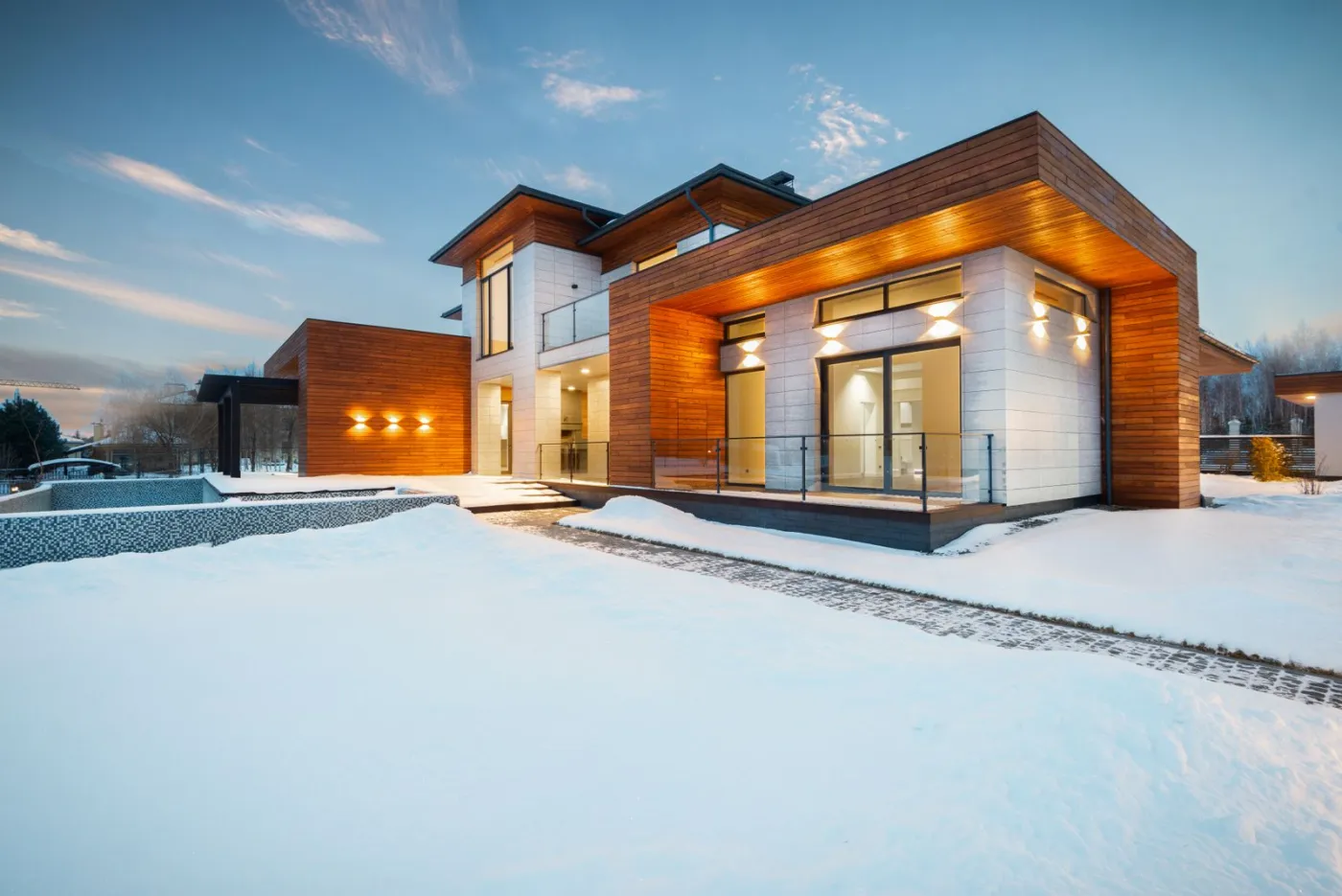
Central Okanagan · Climate & Concrete
Freeze-Thaw Concrete Damage in Kelowna
By Mike Romer, Owner · OKGN Concrete Sealing · Environment Canada & Climate Atlas data
Quick Answer
Kelowna experiences roughly 69 freeze-thaw cycles a year (Climate Atlas of Canada) and 150 days where the temperature drops below freezing (Environment Canada). Every one of those cycles lets water seep into concrete, freeze, expand about 9%, and push the surface apart — the scaling, pitting and spalling you see on older Kelowna driveways. A penetrating sealer fills the pores so water can't get in and freeze, which is why it's the most effective protection in this climate.
The Numbers
Kelowna's Winter, by the Data
Kelowna sits on the floor of the Central Okanagan at about 430 metres, and its winters do something specific to concrete: they hover right around the freezing mark for months. That's the worst-case scenario for a slab. It isn't the deep cold that cracks concrete — it's the repeated crossing of 0°C, and Kelowna crosses it more than anywhere else we work.
Environment Canada's Kelowna Airport station records about 150 frost days a year — days the temperature falls to or below 0°C — and 31 'ice days' that never climb back above freezing. The Climate Atlas of Canada puts Kelowna at roughly 69 freeze-thaw cycles a year. Each cycle is one more chance for water sitting in the concrete's pores to freeze, expand, and force micro-fractures open a little wider.
Layer on an intense summer (UV index 8–9) that breaks down surface binders, plus winter road salt near the street, and unsealed Kelowna concrete ages faster than almost anywhere in BC. That's the whole reason we exist.
Kelowna, BC — Climate Normals
Station: Kelowna A (airport) · 1981–2010
| Frost days per year (≤ 0°C) | ~150 |
|---|---|
| Freeze-thaw cycles per year | ~69 |
| Ice days per year (never thaws) | ~31 |
| Mean January temperature | -2.5°C |
| Coldest on record | -36.1°C (December 1968) |
| Annual snowfall | ~89 cm |
| Annual precipitation | ~387 mm |
Why It Matters
What This Does to Kelowna Concrete
Freeze-thaw damage isn't cosmetic — once water gets into the slab and starts cycling, you get surface scaling, then pitting, then spalling that exposes the aggregate and, eventually, the rebar. Replacing a failed driveway runs $8,000–$15,000. Sealing it before the damage starts is a fraction of that.
From the lakeside slabs in Lower Mission to the hillside driveways in Glenmore and the newer pours in Rutland and Upper Mission, the freeze-thaw exposure is the same across Kelowna — the concrete just needs protecting before the cycles do their work.
The Mechanism
How Freeze-Thaw Actually Breaks Concrete
It isn't the cold that cracks concrete — it's the water inside it. Here's the three-step process that repeats every time Kelowna crosses the freezing point.
Water soaks in
Concrete is porous. Rain, snowmelt and groundwater seep into the pores and capillaries of an unsealed slab and sit there.
It freezes & expands
When the temperature drops below 0°C, that trapped water freezes and expands about 9%, pushing outward on the surrounding concrete with real force.
The surface fails
One cycle is harmless. Repeated dozens of times a year, the pressure fatigues the surface — first scaling, then pitting, then spalling that exposes aggregate and rebar.
The fix is to remove step one. A penetrating sealer like Pavix CCC-100 soaks up to half an inch into the slab and fills those pores, so water can't get in and freeze in the first place. No water inside the concrete means no freeze-thaw damage — and because it's not a surface film, there's nothing to peel, and the concrete keeps its natural look and grip. It's water-based and VOC-free, resists de-icing-salt corrosion, and Chem-Crete rates it at up to 90% lower ice adhesion — so a sealed slab sheds winter ice and shrugs off road salt too.
In Context
How Kelowna Compares Across the Okanagan
Freeze-thaw exposure isn't uniform across the valley — there's a real north-to-south gradient. See where Kelowna sits, and read the full city-by-city breakdown.
FAQ
Freeze-Thaw & Concrete in Kelowna
01How many freeze-thaw cycles does Kelowna get per year?
+
About 69 a year, according to the Climate Atlas of Canada's 1976–2005 baseline for Kelowna. A freeze-thaw cycle is a day where the temperature rises above 0°C and then falls back below it. Environment Canada separately records around 150 days a year in Kelowna where the temperature drops to or below freezing, so the potential for freeze-thaw action is high through the shoulder seasons.
02Why is freeze-thaw so damaging to Kelowna concrete?
+
When water gets into concrete's pores and freezes, it expands roughly 9% and pushes outward with enormous force. One cycle is harmless; 69 a year, for years on end, fatigues the surface until it scales, pits, and spalls. Kelowna's habit of hovering right around 0°C all winter makes it a textbook freeze-thaw climate — worse for concrete than a colder city that simply stays frozen.
03Does sealing concrete actually stop freeze-thaw damage in Kelowna?
+
It stops the mechanism that causes it. Freeze-thaw damage needs water inside the slab. A penetrating sealer like Pavix CCC-100 fills the pores and capillaries so water can't get in, freeze, and expand in the first place. There's no surface film to peel, and it's rated against the ASTM C666 freeze-thaw test. It's the single most effective thing a Kelowna homeowner can do to extend the life of exterior concrete.
Protect Your Kelowna Concrete Before the Next Freeze
A penetrating seal keeps water out of the slab so freeze-thaw can't crack it — backed by a 5-year written warranty. Free, no-obligation on-site assessment in Kelowna and across the Okanagan.