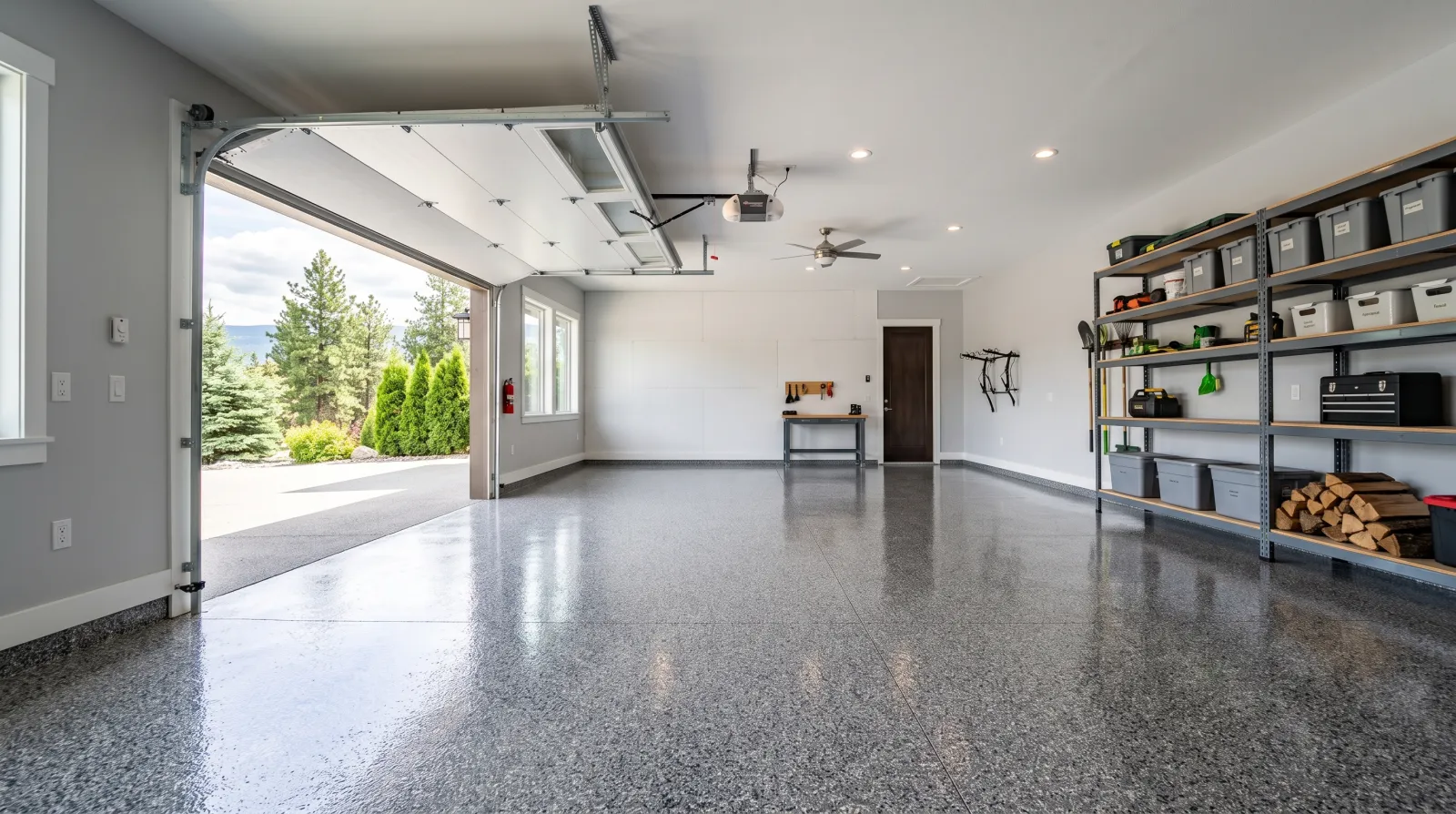
Concrete Problem Guide
Concrete Dusting: What It Is, What Causes It, What Actually Helps
By Mike Romer, Owner · OKGN Concrete Sealing · Updated July 2026
Quick Answer
Concrete dusting is a surface that constantly sheds fine grey powder — sweep it today, it's dusty again next week. It means the top layer of cement paste is weak and abrading away under foot and tire traffic, usually because of finishing or curing issues when the slab was poured. It's most common on garage, shop and basement floors. This is one problem sealing solves outright: a penetrating sealer reacts inside the surface and chemically hardens it, so the paste stops abrading into powder. For heavy-traffic garages, an epoxy or polyaspartic coating is the step-up option — we do both.
What You're Seeing
What Dusting Is — and What's Happening Underneath
Dusting shows up as a fine, chalky grey powder that keeps appearing on the surface no matter how often you sweep — it tracks into the house, coats stored items, and hazes car finishes in a garage. Wipe the bare slab with a dark cloth and it comes up grey.
The powder is the slab's own surface wearing away. The top layer of cement paste is too weak to resist abrasion, so ordinary traffic grinds it into dust continuously. The slab underneath is usually fine — it's specifically the surface layer that's soft.
Root Causes
What Causes Dusting in the Okanagan
Bleed water worked into the finish
If a slab is troweled while bleed water is still rising, that water gets worked back into the top layer, weakening the paste at exactly the surface that takes all the wear.
Poor or fast curing
Concrete that dries out too quickly — hot weather, wind, no curing compound — never develops full surface strength. The result is a soft skin that abrades for the life of the slab.
Carbonation on interior pours
Fresh interior concrete exposed to heater/vehicle exhaust during curing can carbonate at the surface, leaving a permanently soft, dust-prone layer. Classic in winter garage and shop pours.
Freeze-thaw is the engine behind most Okanagan concrete damage — see the government climate data for your city in our city-by-city freeze-thaw breakdown.
The Honest Verdict
This one sealing genuinely fixes
Unlike spalling or pitting — where sealing prevents but can't restore — dusting is a problem penetrating sealing addresses directly. The sealer soaks into that weak surface layer and reacts with the free lime in the paste, chemically densifying and hardening it. The surface stops shedding, and because the reaction happens inside the concrete, there's no film to wear off. For garages and shops that take heavy tire traffic and want a finished look on top of the fix, an epoxy or polyaspartic floor coating over a diamond-ground surface is the step up — that's a service we offer too, so you get an honest recommendation between the two, not an upsell.
Prevention
How to Keep Dusting From Starting (or Spreading)
On an existing slab, hardening/sealing the surface is the fix and the prevention in one. For new pours: proper curing (compound or wet cure, no rushed drying, no exhaust exposure) prevents the weak layer from forming in the first place.
FAQ
Concrete Dusting: Common Questions
01Why does my garage floor keep making dust?
+
The surface layer of the slab is weak — usually from bleed water worked into the finish, rushed curing, or exhaust exposure during a winter pour — and normal traffic is grinding it into powder. It won't stop on its own, because the powder IS the floor wearing away. A penetrating sealer hardens that layer chemically and stops the shedding; an epoxy or polyaspartic coating is the heavier-duty option for hard-working garages.
02Does sealing stop concrete dusting permanently?
+
Yes — this is one of the few concrete problems where sealing is the actual cure, not just prevention. The sealer penetrates the weak surface, reacts with the cement chemistry, and densifies it into a harder layer that resists abrasion. There's no film to wear off, so the fix doesn't peel or need recoating the way a painted surface would.
03Should I seal or epoxy-coat a dusting garage floor?
+
Both solve the dusting; they suit different garages. Penetrating sealing is the simpler, natural-look fix — hardens the surface, no film, no change in appearance. An epoxy or polyaspartic coating adds a finished, cleanable, oil-resistant surface on top and suits hard-working garages and shops. We offer both, so the recommendation on your free assessment is based on how you use the floor, not on which one we sell.
Not Sure How Bad Your Dusting Is?
We'll look at it in person and tell you straight — whether sealing is the right fix, or whether you need a repair contractor first. Free, no-obligation, anywhere in the Okanagan.