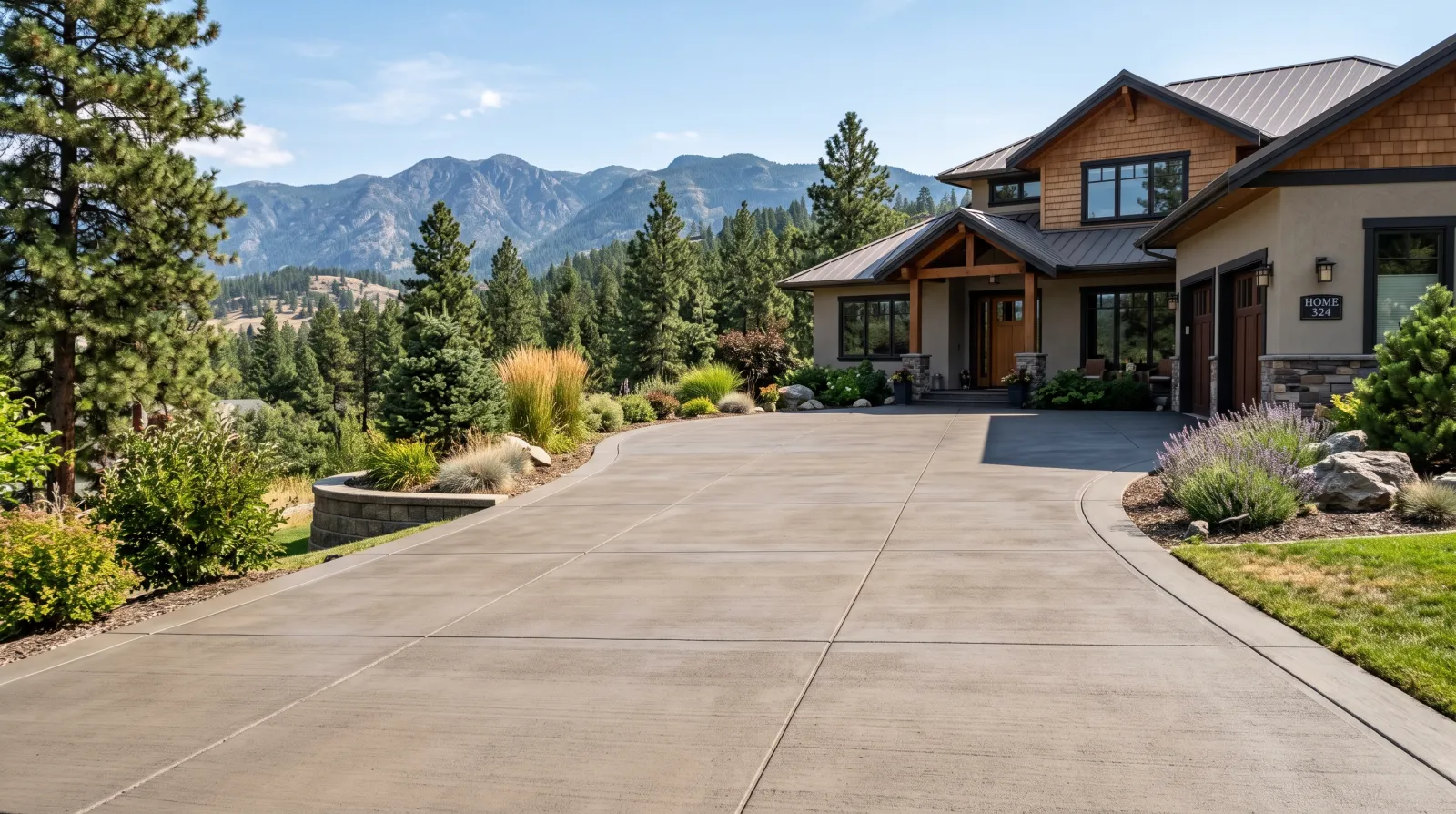
The Salt & Freeze-Thaw Test
Best Concrete Sealer for Driveways in 2026
By Mike Romer, Owner · OKGN Concrete Sealing · Updated September 2026
Quick Answer
For a driveway specifically — not a patio, not a pool deck — a penetrating sealer like Pavix CCC-100 is the better pick, and it's not close. Vehicle traffic and winter de-icing salt are exactly what wears through an acrylic film fastest, and a penetrating sealer has no film to wear through. Acrylics are a great choice for decorative surfaces that don't see daily traffic — just not the right tool for a driveway in a freeze-thaw climate.
Judged on the Right Criteria
A Driveway Sealer Has to Survive Three Things a Patio Doesn't
Most “best concrete sealer” content treats every surface the same. A driveway isn't a patio — it carries vehicle weight, takes tire friction in the same spots every day, and in the Okanagan, gets hit with de-icing salt every winter. Those three things determine which sealer actually holds up, more than any general product review does.
Full disclosure: Pavix CCC-100 is the penetrating sealer OKGN applies professionally. It wins this comparison on the merits — driveways specifically punish film-forming products — not because it's what we sell. See our broader best concrete sealer comparison for how it stacks up against acrylic, DIY, and other options across every surface.
The Test
5 Criteria, Judged Honestly
Vehicle traffic & tire friction
Winner: PenetratingA penetrating sealer has no surface film to wear through. An acrylic film gradually abrades under tires, especially where a vehicle turns or brakes repeatedly in the same spot.
Winter de-icing salt exposure
Winner: PenetratingSalt accelerates the whitening and peeling acrylic films are known for. A penetrating sealer has soaked into the slab, so there's no film for the salt to degrade.
Freeze-thaw resistance
Winner: PenetratingThe Okanagan sees 50-80+ freeze-thaw cycles a year. A penetrating sealer blocks water from entering the pores where it would otherwise freeze, expand, and force the surface apart.
UV exposure over a full summer
Winner: Tie, different failure modesAcrylic can yellow or chalk under intense UV over time. Penetrating sealer doesn't change the surface, so there's no film to discolour — but this is a smaller factor for driveways than traffic and salt.
Decorative colour/gloss
Winner: AcrylicIf the driveway is stamped or coloured and showing it off matters, acrylic wins outright — but that's a look decision, not a durability one.
Bottom Line
For a Driveway, Durability Beats Decoration
Four of five criteria that actually matter for a driveway favour a penetrating sealer. The one that favours acrylic — decorative colour and gloss — matters most on surfaces that don't take vehicle traffic. If your driveway is stamped or coloured and you want both the look and the durability, talk to us about the trade-offs on your on-site assessment; there are ways to balance both depending on how the driveway is used.
Want the full technical comparison across every surface, not just driveways? Read penetrating vs. acrylic sealer, or see real pricing in our cost guide.
FAQ
Frequently Asked Questions
01What is the best concrete sealer for driveways specifically?
+
For a driveway, durability under vehicle traffic and winter de-icing salt matters more than any other factor — and that favours a penetrating sealer over an acrylic every time. A penetrating sealer like Pavix CCC-100 has no film to wear through from tires, and it doesn't react with de-icing salt the way an acrylic film can (salt speeds up the peeling and whitening acrylics are known for). Acrylics are the better choice for a decorative patio, not a daily-driver driveway.
02Why does a driveway need a different sealer than a patio?
+
A driveway takes constant vehicle weight, tire friction, and — in freeze-thaw climates like the Okanagan — de-icing salt every winter. A patio mostly deals with foot traffic and weather. That combination of load and salt exposure is exactly what wears through an acrylic film fastest, which is why penetrating sealers are the stronger pick for driveways specifically, even though acrylics do a great job on decorative surfaces that don't see vehicle traffic.
03Does de-icing salt actually damage sealed concrete?
+
Unsealed or acrylic-sealed concrete, yes — de-icing salt accelerates surface scaling and can cause an acrylic film to whiten, peel, or haze faster than UV and traffic alone would. A penetrating sealer that's soaked into the pores doesn't have a film for the salt to attack, and it blocks the water that salt uses to force freeze-thaw damage in the first place. That's the core reason penetrating sealers are the standard recommendation for salted winter driveways.
04How long should a driveway sealer last?
+
A quality penetrating sealer professionally applied should protect a driveway for 7-10+ years from a single application — OKGN backs its work with a 5-year written warranty. A topical acrylic on a driveway typically needs recoating every 1-3 years, often sooner because of the traffic and salt exposure a driveway specifically sees. If a driveway sealer is marketed to last only a year or two, that's a sign it's a film-forming product not built for vehicle traffic.
05How much does it cost to seal a driveway properly?
+
A typical driveway sealing job in the Okanagan runs $550 to about $1,800 all-in for penetrating sealer, scaling with size — see our full cost guide for exact ranges by size and surface. That's a small fraction of the $4,000-$8,000+ it costs to tear out and repour a driveway once freeze-thaw damage has taken hold.
Get the Sealer That's Actually Built for a Driveway
OKGN applies Pavix CCC-100 across the Okanagan — free on-site assessment, one all-in written price, and a 5-year warranty on the work.